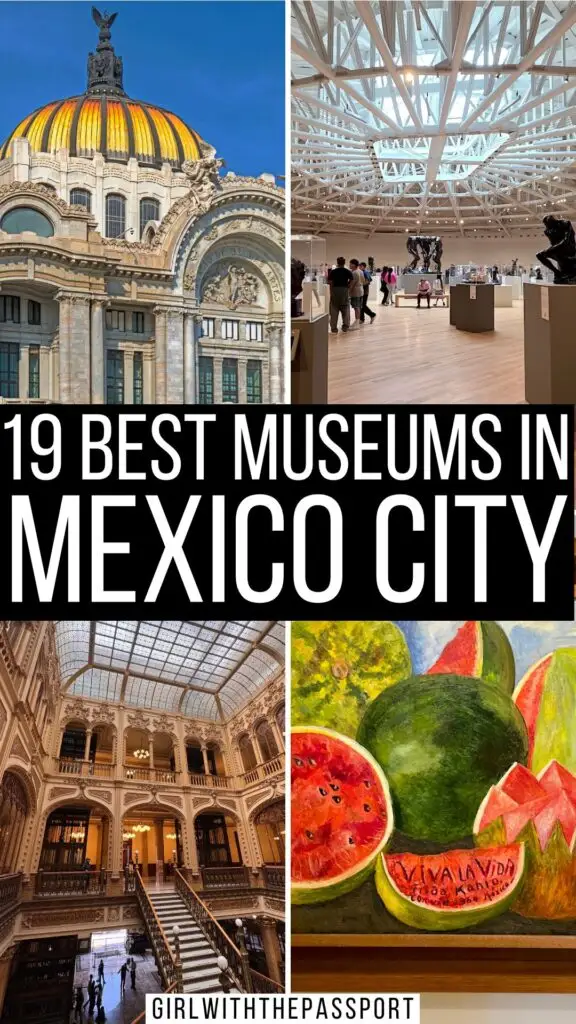
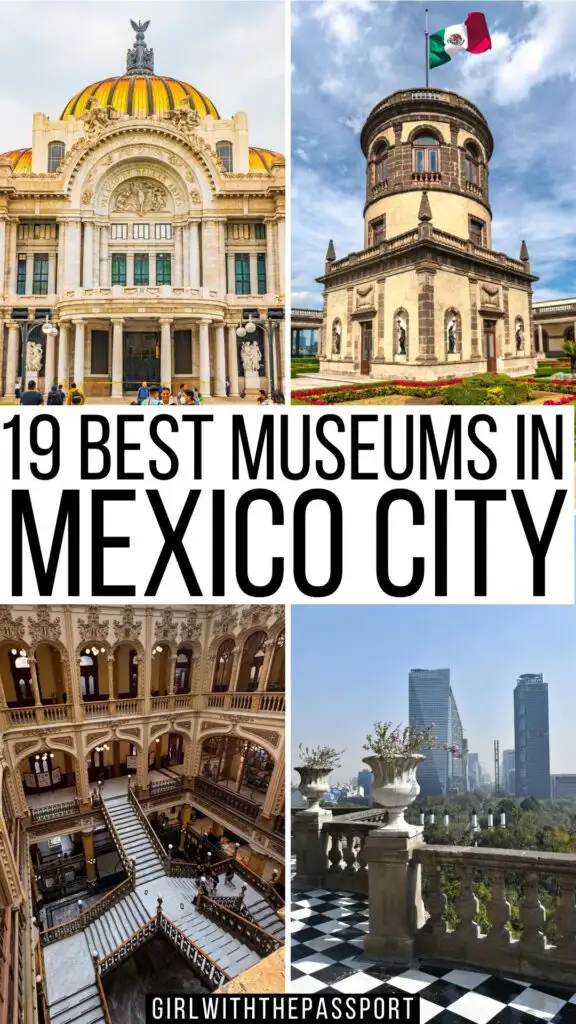
If you’re hardcore dreaming about the best museums in Mexico City, chances are you’re planning a trip soon and wondering which ones are legit worth your limited time.
Not gonna lie, I remember feeling that exact same way my first few times in the city. I found myself scrolling through endless lists, unsure which museums were unforgettable and which were just okay.
I mean, Mexico City has so many hidden gems that choosing a few and planning an itinerary can feel harder than navigating the metro at rush hour.
The challenge is that you want to see all those iconic must-sees in Mexico City, but still want to find cool spots off-the-beaten-path that still interest you.
So what’s a human to do? Well, after spending months living in the city, revisiting museums with friends, and returning again and again, I know which ones are hot and which ones are 100% not.
And that’s why I created this epic guide. I’ll walk you through Mexico City’s museum scene and give honest reviews so that you can quickly and easily plan the perfect itinerary.
This post may contain affiliate links. Please see my disclosure for more information. As an Amazon Associate, I earn a small commission from qualifying purchases.
1. National Museum of Anthropology


If there’s one place in Mexico City that truly lives up to the hype and feeds your love of ancient cultures, it’s Museo Nacional de Antropología.
It kind of feels like this giant temple filled with all of these amazing Mayan artifacts dedicated to Mexico’s deep past.
Just plan to spend at least 3-4 hours here since this epic spot puts the ass back in massive.
From the moment you step inside the airy central courtyard, you know you’re in for something special.
I mean, this isn’t just a museum, it’s a place that takes you on an incredible journey through thousands of years of history.
Start with the crown jewel, the Aztec Sun Stone. It’s a massive carved calendar that feels like staring into the heart and soul of an ancient empire.
Next, wander through halls on the ground-floor that are organized by region and era, where you’ll encounter Olmec colossal heads, Teotihuacan relics, and intricate pottery.
Highlights include the towering Coatlicue statue, a raw and powerful Aztec sculpture, and the mysterious Disk of Mictlāntēcutli, representing the god of death from Teotihuacan’s heyday.
Finally, don’t miss the Maya exhibit with its recreation of Pakal’s tomb and stunning jade funerary artifacts. I found these relics to be mega impressive. It’s also a room where silence feels sacred.
Upstairs, the ethnography halls detail present-day indigenous traditions, with clothing, tools, and stories that reveal how ancient history still shapes modern-day life.
Personally, I wouldn’t visit any other Mexico City museums on the same day since this place is huge and you will probably need a museum break afterward.
It’s also worth noting that this museum is free on Sundays, making it one of the best free things to do in Mexico City.
2. Palacio de Bellas Artes


You are forbidden from leaving Mexico City without hitting up the Palacio de Bellas Artes.
After all, it’s a cathedral of art and creativity that pays homage to the cultural heart of the city.
The building itself stops you in your tracks with a luminous white marble façade that is topped with a multicolored dome that stands out against the skyline.
Real talk? Stepping inside feels like a celebration of Mexican identity as expressed through stone, glass, and paint.
Once you’re in, don’t rush past the grand theatre. It’s pretty dang impressive since the venue hosts a variety of operas, ballets, and concerts, making it one of the country’s premier performing arts centers.
Afterward, hit up the Museo del Palacio de Bellas Artes, which houses an extraordinary collection of murals by the leading voices of the Mexican muralist movement, aka Diego Rivera, José Clemente Orozco, David Alfaro Siqueiros, Rufino Tamayo, etc.
Yup, these were basically the ballers who all helped transform public art in the 20th century.
Some murals, like Rivera’s Carnaval de la vida mexicana, are vibrant, sprawling narratives that encapsulate history and folklore.
Meanwhile, other pieces represent social struggle, identity, and aspiration in insane detail.
On top of the permanent murals, the museum also regularly hosts world-class temporary exhibitions that include European impressionists, modern Latin American masters, and more.
So, you’ll never get bored since there’s always something new to discover.
Just give yourself the time you need to study each mural, catch a performance if possible, and visit the smaller galleries on the upper floors.
It’s one of those places that reminds you that you travel for beauty, for history, and for the stories that bring it all together.
3. Frida Kahlo Museum


If you’re heading to Coyoacán and have a love for both art and life stories, the Frida Kahlo Museum (La Casa Azul) is a full-on pilgrimage you won’t want to miss.
However, you 100% need to book your tickets WELL in advance since this place gets sold out weeks in advance, especially on weekends.
Stepping through the bright cobalt blue walls, you immediately feel like you’re in Frida’s world. And that makes sense since you’ll see the very rooms where she lived, loved, suffered, and created amazing art.
The museum does a great job of preserving her bedroom so that you can see that famous mirror hanging above her bed.
You know, the one that she installed so she could enjoy painting during long periods of immobility.
You’ll also get to see her studio, complete with an easel gifted to her by Nelson Rockefeller and all of the brushes, palettes, and books that influenced her creative process.
Next, wander through the kitchen and garden to see personal artifacts like hand-painted ceramics, traditional Mexican art, and corsets/medical paraphernalia that tell the story of her lifelong medical issues.
All in all, plan to spend at least an hour here so that you can soak up the atmosphere and read the stories behind each object.
From her iconic “Viva la Vida” still life (rumored to be her last painting) to the intimate everyday items that reveal her passions and struggles, visiting Casa Azul feels like reading a page from Frida’s diary.
4. Soumaya Museum


If you love art and design, run, don’t walk, to the Soumaya Museum. It’s stunning, curvaceous exterior looks a futuristic shell that is made up of thousands of aluminum tiles.
So, get ready for an epic photo op even before you’ve stepped inside.
Once you’re through the doors, wander through six amazing floors of one of the city’s most eclectic art collections.
After all, this museum is home to tens of thousands of incredible pieces that span across the centuries, from European old masters to Mexican modern art and rich decorative pieces.
On the top floors, you’ll find one of the largest collections of Rodin sculptures outside France. Believe it or not, it actually includes iconic bronzes like The Thinker and The Kiss.
These works sit beathed in natural light that streams in through the lofty skylights above.
Additionally, do not skip the European paintings and sculptures by masters like Monet, Picasso, and Renoir.
You also must see engaging works by Rivera and Tamayo that give depth and context about the museum’s Mexican holdings.
Heck, there’s even fascinating numismatic and decorative art tucked away in between the galleries that is super impressive.
While general entry is free, guided tours are popular. So, always book tours well in advance to ensure that you don’t miss out on the best parts of the museum.
5. Templo Mayor (Aztec ruins)


Buckle up because the Templo Mayor archaeological site and museum will take you straight into the heart of ancient Tenochtitlan.
Believe it or not, this place was at the ceremonial and political center of the Mexica (often called Aztec) empire.
So, walking among the ruins feels like stepping back into a world filled with ritual, sacrifice, and spiritual significance.
Start your visit by booking your tickets in advance, especially if you want skip-the-line access or to do a guided tour. Yeah, this site is a popular spot in the historic center and cgets packed.
Once in the archaeological zone itself, you’ll see the exposed foundations of what was once a towering double pyramid with shrines dedicated to the war god Huitzilopochtli and the rain god Tláloc.
It’s a great spot if you want to get a real sense of how layered and complex this sacred structure was.
Once inside the on-site Templo Mayor Museum, don’t miss the huge carved Coyolxauhqui stone, which was unearthed right at the base of the temple and sparked an entire excavation project.
The striking Tlaltecuhtli monolith, the earth deity that dominates the vestibule, will also have you literally picking your jaw up from off the floor.
Finally, the museum’s exhibits, which are arranged in thematic halls, walk you through Mexica religion, daily life, ceremonial offerings, and trade.
So get ready to be amazed by thousands of artifacts that were recovered from the site.
Overall, pairing a visit to the ruins with the museum makes for a powerful half-day exploration and gives you deep insights into Mexico’s pre-Hispanic past.
6. Museo Memoria y Tolerancia
Museo Memoria y Tolerancia is one of those places that stays with you long after you leave.
When I first visited, I expected it to be educational, but I didn’t realize how emotional and immersive it was gonna feel.
See, this museum focuses on human rights, genocide, and the importance of tolerance. As a result, it does not shy away from difficult topics that are extremely important to discuss.
To be honest, walking through the exhibits feels like moving through history, with powerful photos, videos, and personal testimonies that make the history here really come to life.
One absolute must-see section is the Holocaust exhibit. It’s incredibly detailed and moving, especially since the entire room is filled with survivor stories and artifacts.
The genocide sections with regard to Rwanda, Armenia, and Bosnia are also unforgettable and really broaden your perspective beyond what you might have learned in school.
Meanwhile, when it comes to the tolerance part of the museum, I loved the interactive exhibits that make you reflect on discrimination, stereotypes, and everyday choices.
There’s even a space where you can record your thoughts, which makes the experience feel about 10,000 times more personal.
The architecture of the building also adds to the experience since there are lots of quiet spaces for reflection that are enhanced by striking design.
Overall, it’s not a super “light-hearted” museum. Instead, it’s a place full of meaningful, eye-opening exhibits that are deffo worth visiting.
7. Museo de Arte Popular

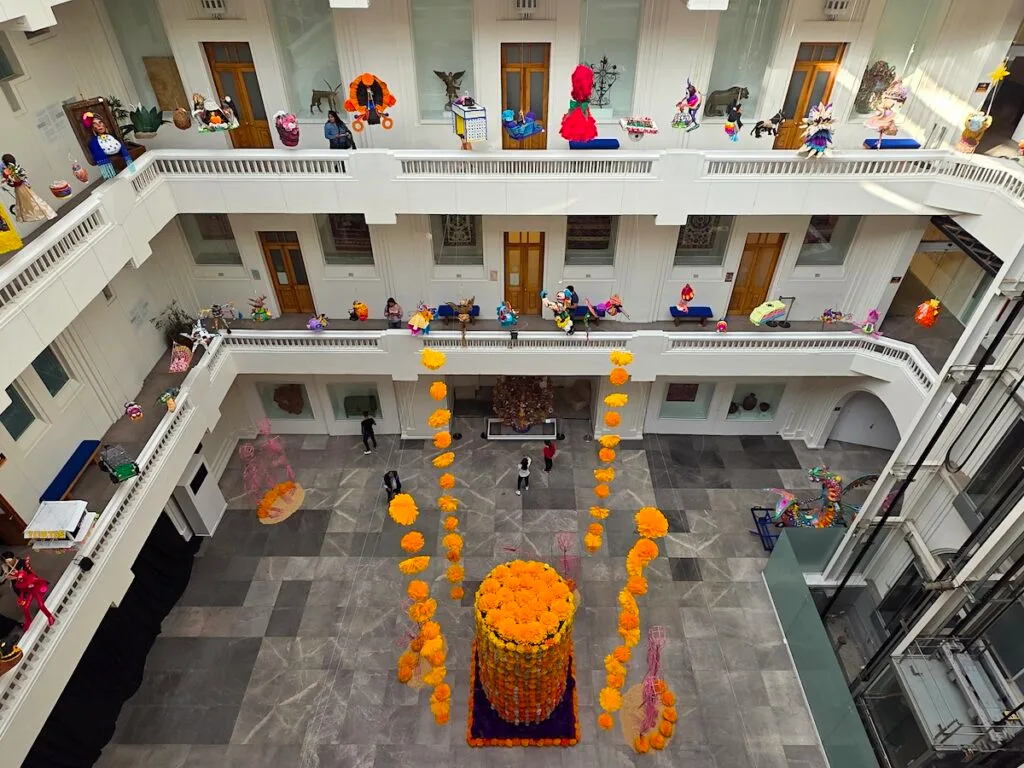
Visiting Museo de Arte Popular in Mexico City made me feel like I was frollicking through the very essence of Mexican creativity.
From the moment I walked into this fully restored Art Deco-style firehouse, I was blown away by the bright colors, bold patterns, and objets d’art that look like they’re basically smiling back at you.
The museum’s permanent galleries are hands-down must-see since they are brimming over with dazzling textiles, intricate pottery, delicate lacquer (maque) work, and masks that seem to take on a life of their own.
I was especially delighted by the alebrijes. You know, those fantastical, neon-painted creatures that feel like they wandered straight out of Mexican folklore and into a Tim Burton movie.
I love that they are on display all year long and that you can get a feel for the incredible level of imagination that went into creating these enchanting creatures.
What made my visit 10,000 times better (yes, that is an exact number) are the colorful everyday objects turned into art, toy collections that make you smile, and seasonal exhibits that spotlight regional artisans.
Heck, they even run workshops, storytelling sessions, and puppet shows that give you a deeper appreciation for Mexico’s epic folk traditions.
Finally, the gift shop is NOT optional. It’s packed with authentic crafts that make for unforgettable souvenirs from Mexico.
Overall, plan to spend between 60 and 90 minutes here. Trust ,e, this place absolutely deserves a little bit of your time.
8. Museo Anahuacalli


The moment I walked into Museo Anahuacalli in Coyoacán, I immediately felt like I was insome fever dream Diego Rivera once had.
After all, this giant structure feels insanely bold, ancient, and deeply Mexican. That makes sense since the building was carved out of volcanic stone from the surrounding pedregal.
So, this place looks less like a museum and more like a mysterious temple rising out of the ground. It’s also 100% apparent that this isn’t a typical gallery space.
Instead, it was a place Rivera designed himself so that he could live among the art he loved so very much.
Inside, the collection of pre-Hispanic artifacts on display is absolutely incredible.
I mean, Rivera was super dedicated and gathered together thousands of pieces that include everything from Olmec heads to Zapotec figurines.
Sadly, only a few thousand artifacts are on display today, with each room feeling like a mini treasure hunt.
I also love that the arrangement of these objects allows you to appreciate their artistic beauty and not just their history.
I still remember the haunting stone faces and tiny ceremonial vessels that made me stop and think about the people who created them.
Additionally, don’t miss out on sketches of Rivera’s own murals tucked away in the upper galleries. Not gonna lie, seeing his hand on paper adds another layer of awesome to the visit.
Finally, be sure to climb all the way to the top since the terrace views across the museum and over the city are an epic bonus/
9. Chapultepec Castle


Can I be real with you? Visiting Chapultepec Castle feels more like stepping into a real-life fairy tale than an actual museum.
I love how the space is packed with layers of history that are hidden away in every room, complete with a jaw-dropping view of Mexico City.
Perched high on a hill in Bosque de Chapultepec, it’s not just a museum. Instead, it’s a palace, a fortress, and one of the most exquisite places in the city.
Now, the first thing that really blew me away was the views from the terraces and balconies. Yeah, you can see the whole city spread out before you, and it is a perfect spot for photos.
Inside, the Museo Nacional de Historia reveals all the details from Mexico’s fascinating past, including everything from the Spanish conquest to the Revolution.
Rooms are also filled with everything from vintage firearms and elegant furniture to vivid period paintings and delicate personal items.
I also hardcore loved exploring the Imperial and Presidential Chambers, where Maximilian and Carlota once lived.
Yeah, the décor and insane stained-glass windows make you feel like you’ve hopped in a time machine and gone back to the 19th century.
Whatever you do, though, don’t forget to take a look at the murals scattered throughout the complex. They’re dramatic, impressive works that bring the spirit of the Mexican Revolution to life.
10. Museo de Arte Moderno

The Museo de Arte Moderno is one of those places in Mexico City that I come back to again and again, especially when I want a break from the noise of Reforma and Chapultepec.
Inside, the collection makes for a solid crash course in modern Mexican art, with works by Diego Rivera, José Clemente Orozco, and David Alfaro Siqueiros.
Not gonna lie, seeing these pieces in person really helped me understand how deeply intertwined art and politics were in the 20th century.
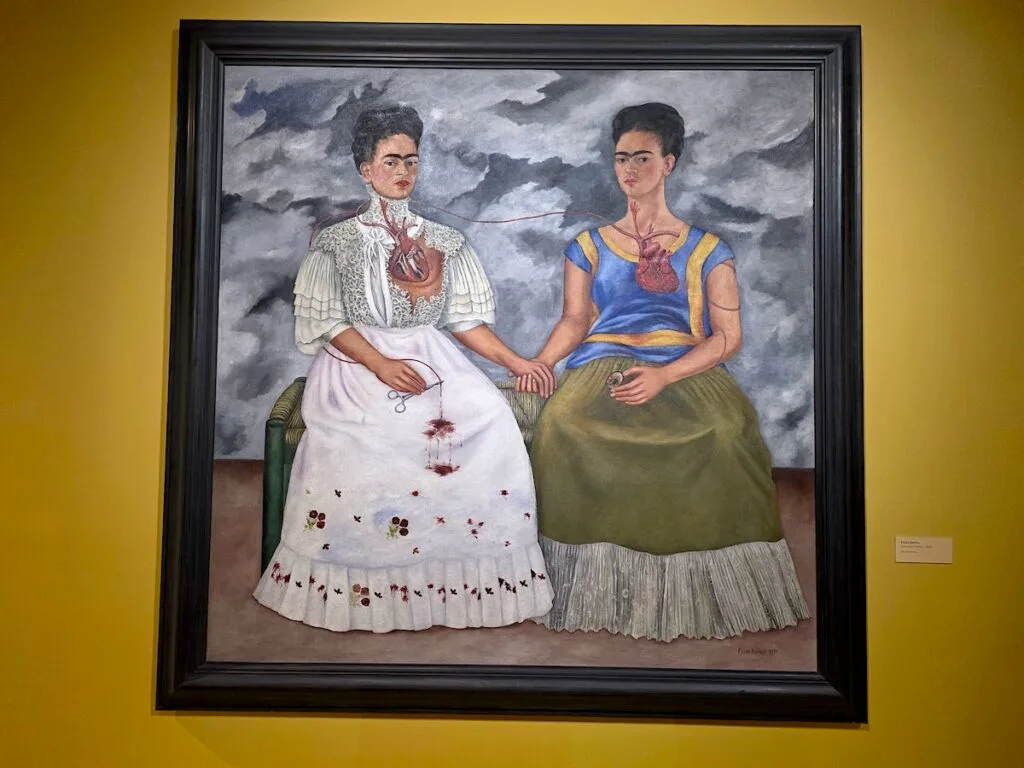
One of the absolute must-sees is Frida Kahlo’s Las Dos Fridas. I audibly gasped the moment I saw it. Yup, it was that beautiful.
So, even if you’ve seen it in photos a hundred times, standing in front of it is something else entirely.
I also love how the museum mixes big-name artists with rotating temporary exhibitions. So, there’s literally always something new to discover.
It’s also a place that never feels stuffy or overwhelming, making it easy to take your time and actually enjoy what you’re looking at.
However, do not rush out the door when you’re done with the galleries. Trust me, the sculpture garden outside is a highlight in its own right.
Not gonna lie, it’s hard to find this level of tranquility in the heart of CDMX.
Set among trees and filled with open paths, it’s the perfect place to wander, sit down, and let everything sink in. On a nice day, it’s one of the most peaceful corners of Chapultepec.
11. Museo Nacional de Arte

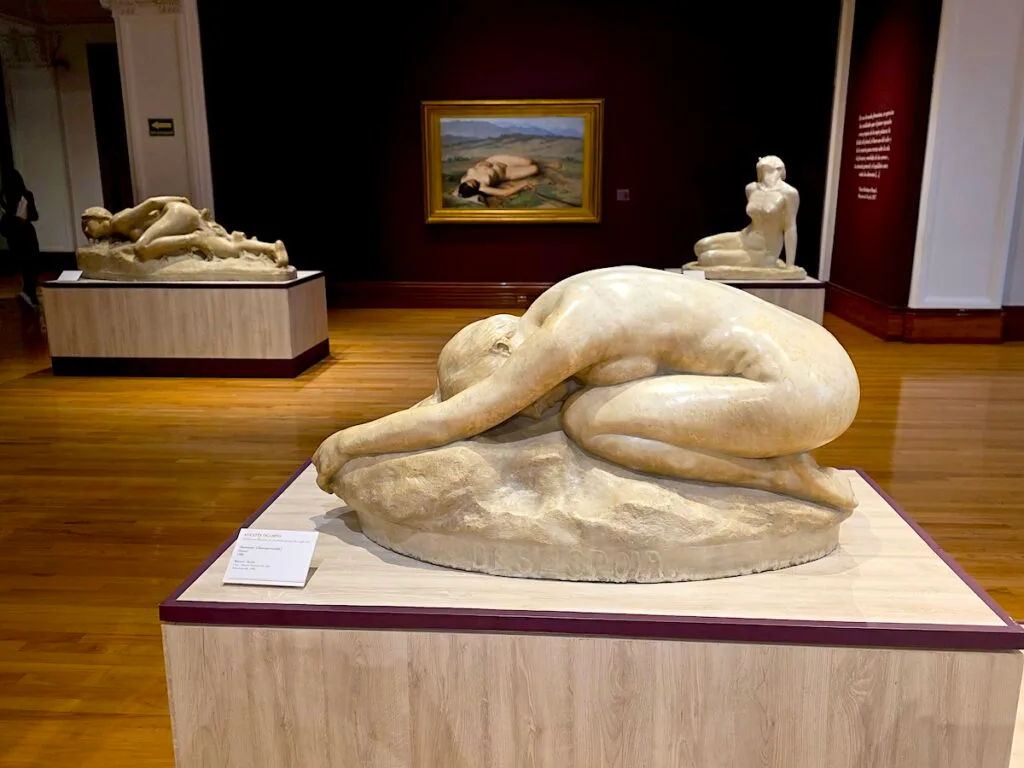
The Museo Nacional de Arte, or MUNAL, is one of those museums that impresses you even before you step inside.
The building itself is stunning, with a grand staircase, ornate details, and huge windows that make the whole place feel light and elegant.
Every time I’m here, I end up spending way more time here than planned, especially on Sundays when admission is 100% free.
Now, the collection walks you through the history of Mexican art from the colonial period through the early 20th century, and it’s surprisingly engaging.
I definitely felt myself lingering a little longer than I expected.
Some of the must-see highlights include works by José María Velasco, especially his landscapes, which give you a real sense of how Mexico was being visually defined as a nation.
I also love the portrait galleries. I dunno, I just think there is something so fascinating about seeing how power, fashion, and identity were portrayed across different periods of time.
Also, the building itself is just next-level gorgeous and is a place you’ll 100% want to channel your inner Instagram diva.
12. Teotihuacán (Museo del Sitio)


The Teotihuacán Site Museum is easy to overlook if you’re hyper-focused on the massive pyramids outside. But, I pinkie promise that it’s absolutely worth your time.
I visited it after walking along the Avenue of the Dead, and it helped me more fully understand everything I’d seen.
Inside, the exhibits explain how this ancient city was laid out and what daily life might have looked like thousands of years ago.
Some of the must-sees include original murals with traces of color still visible (crazy, right?), carved stone masks, and detailed models that show just how enormous Teotihuacán once was.
What I really like is that the museum doesn’t feel overly academic. Instead, it gives you enough context to deepen the experience without overwhelming you with a ton of info. Yeah, Alex Trebek, I am not.
Now, getting here from Mexico City is pretty straightforward. You can take a bus from Terminal del Norte directly to Teotihuacán, and you’ll be there in about an hour.
Alternatively, join a day tour or drive yourself. Personally, though, I’d just take the bus since it’s cheap and easy.
13. Postal Museum (Palacio Postal)

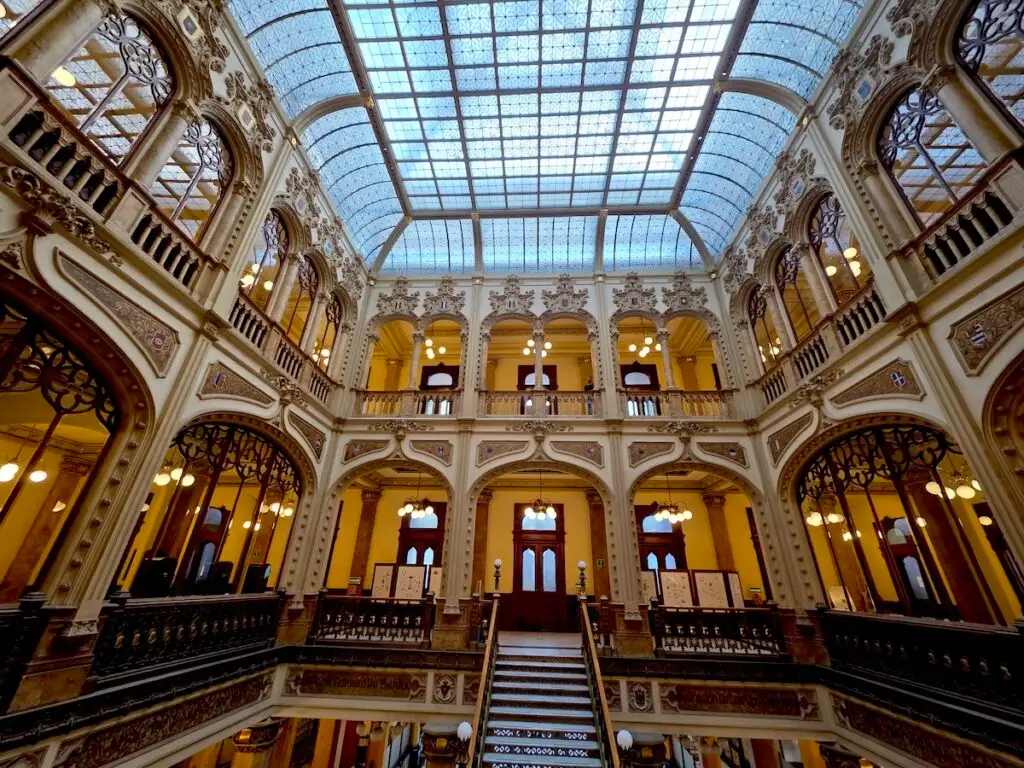
The Palacio Postal is one of those spots that totally caught me off guard in the best possible way.
I basically wandered in expecting to do a quick look around and ended up staying far longer than I expected.
Located right in the Historic Center, just steps from Bellas Artes, the building itself is a vibrant main attraction.
Then, when you step inside, everything is elevated about 10,000 levels.
The grand marble staircase, intricate bronze railings, stained glass ceiling, and ornate details make it feel more like a European palace than a working post office. So, yeah, Repunzel eat your heart out.
Make sure you look closely at the old mail counters and the vintage elevators. They’re still in use and extremely well-preserved.
Even today, locals still come here to send letters and packages, which adds to the charm and makes the space feel alive rather than frozen in time.
Upstairs, there is also a small museum that focuses on the history of Mexico’s postal system.
It’s not huge, but it’s interesting since it’s filled with old stamps, historical documents, and exhibits that explain how communication evolved in the country.
There are even some fun modern art exhibits and some super cool paintings made entirely out of stamps.
Overall, it’s a quiet, underrated stop that combines history, architecture, and everyday life in a way few places in the city manage to do.
14. Leon Trotsky Museum


The Leon Trotsky House Museum is a fascinating stop for anyone who loves history, which comes with a real-life story behind it.
See, this museum sits inside the actual house in Coyoacán where the Russian revolutionary León Trotsky lived in exile.
Yeah, he had a bit of a falling out with Stalin and ended up getting assassinated here in 1940.
Today, the museum has preserved the rooms just as they were when he lived there. So, get ready to explore everything from his study and bedroom to the kitchen.
I loved walking around because it gives you an almost chilling sense of who this man was and the turbulent times he lived through.
Walking through the house, you’ll see his belongings, original furniture, and even bullet marks on the walls from earlier attacks, which makes the visit feel much more intense.
But let’s be real, a drive-by shooting makes everything feel way more intense.
Outside, the garden has a memorial designed by Juan O’Gorman. It contains Trotsky’s ashes alongside those of his wife, which are quietly tucked away among the cacti and other plants he tended himself.
Beyond the historic rooms, there are photo exhibits, temporary art shows, and even cultural events that give deeper context for Trotsky’s life and Mexico’s role as a refuge for political exiles.
It’s well worth a stop if you’re in Coyoacán, especially paired with a visit to Casa Azul since the two former residences are basically right next to one another.
15. Museo Mural Diego Rivera
The Museo Mural Diego Rivera is a small but powerful museum that will deffo stick with you long after you’ve left.
It was built specifically to house Sueño de una tarde dominical en la Alameda Central, Diego Rivera’s massive and iconic mural, and honestly, that alone makes it worth the visit.
Standing in front of it in person is a completely different experience from seeing photos online. However, let’s be real, basically everything is like that.
Anyway, when you stop by, you get a sense for the scale, the details, and the energy of the scene and it all basically just pulls you right in.
Additionally, the mural itself serves as a visual history of Mexico and is packed with famous figures, political commentary, and everyday people from different eras.
You can spend a long time just staring at this beautiful piece of art, spotting characters like Frida Kahlo, La Catrina, and Rivera himself as a child.
Every time I looked at this work, I noticed something new, like a facial expression, a subtle interaction, or a symbolic detail I hadn’t caught before.
Beyond the mural, the museum features temporary exhibitions and displays that add context to Rivera’s work and the historical moment he was responding to.
It’s a short visit, but a memorable one, especially if you’re already visiting Alameda Central or the historic center.
16. Palacio Nacional

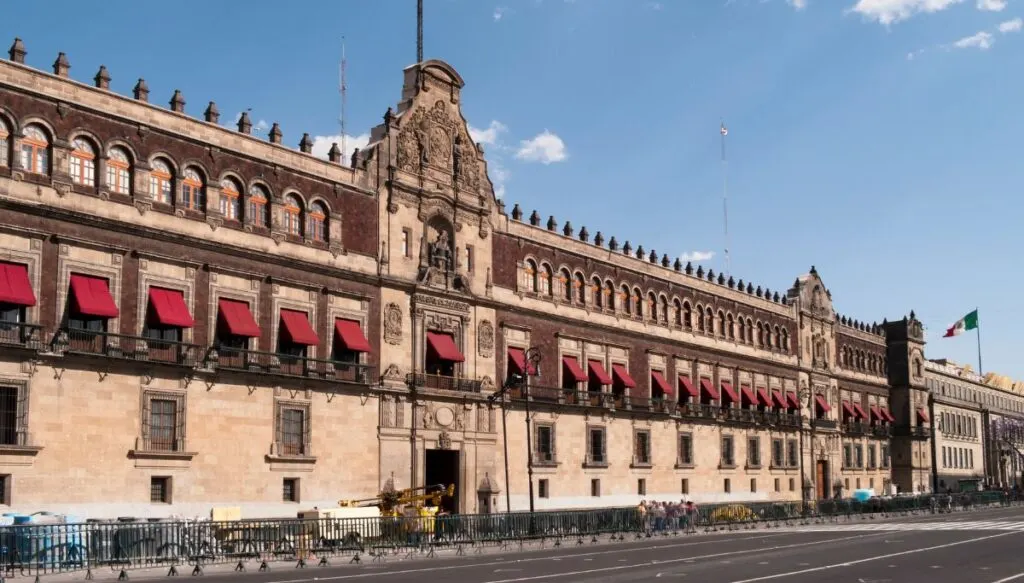
Palacio Nacional is impossible to ignore. Sitting right on the Zócalo, it’s not just an important government building. Believe it or not, it’s actually home to some of the most impressive murals in the country.
I remember walking in (with my passport at the ready), and I immediately felt the weight of history crash down on me.
It was just amazing to know that this site has been at the center of Mexican life since the Aztec empire.
The biggest highlight, hands down, is Diego Rivera’s mural cycle The History of Mexico.
Spread out across the main staircase and upper corridors, these murals are massive, dramatic, and incredibly detailed.
You can easily spend a long time just standing there, following the story from pre-Hispanic civilizations through Spanish conquest and into modern Mexico.
Seeing them in person is powerful, and as always, photos just do not do these works justice.
Beyond the murals, Palacio Nacional itself is beautiful to explore. The courtyards are calm and elegant, and stand in stark contrast to the chaotic Zócalo outside.
There are also tons of exhibits that do a deep dive into Mexican history and culture.
Best of all, it’s free to visit, which makes it a great stop even if you’re short on cold hard cash, like me.
17. Centro de la Imagen

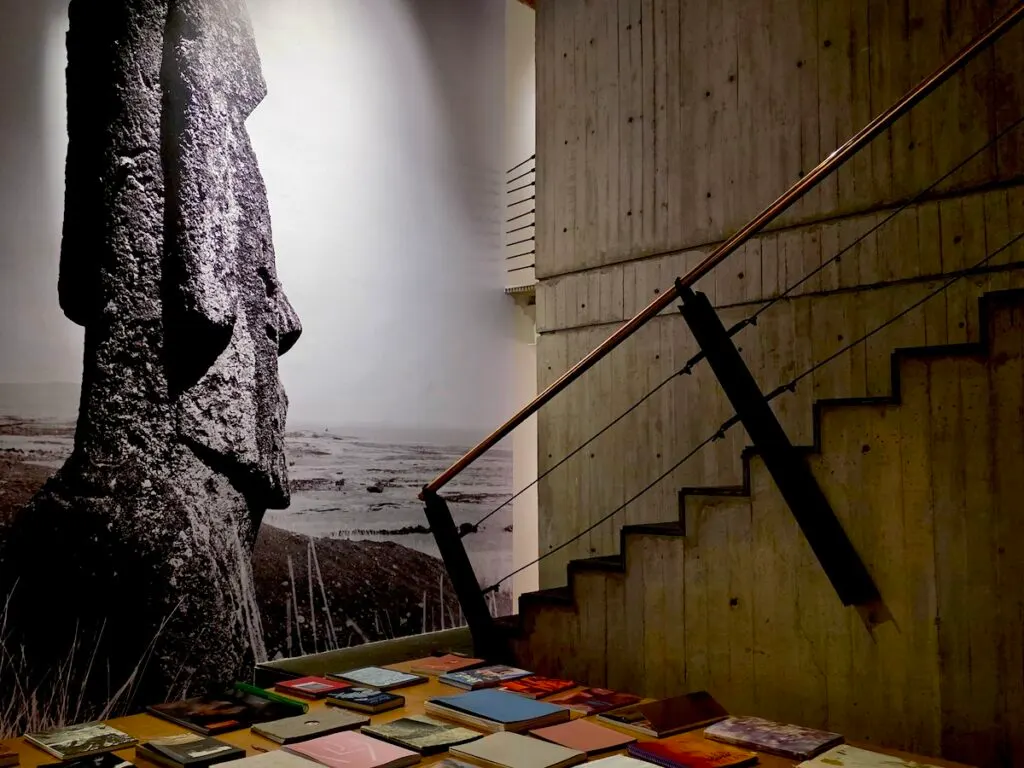
Centro de la Imagen is one of those museums that feels super under the radar…which makes it about 10,000 times better.
Housed inside a former tobacco factory near Plaza de la Ciudadela, it’s a space dedicated entirely to photography.
It’s free to visit, so I’ve been here a bunch. And every time I’ve here, the exhibitions have felt thoughtful, creative, and surprisingly personal.
Yeah, I just love the way they treat photography here, like it’s both art and part of storytelling.
The exhibitions also rotate frequently. Therefore, there’s always something new to see, ranging from contemporary Mexican photographers to international projects tackling social issues, identity, and everyday life.
I’ve seen powerful documentary series here alongside experimental and abstract work. As a result, a visit here always feels fresh and exciting.
One of my favorite parts of Centro de la Imagen is the building itself. The old stone walls, courtyards, and industrial details create a striking contrast with the modern photography on display.
It’s also much quieter when compared with the big-name museums. Yes, Anthropology Museum, I’m talking about you.
So, take your time, read the descriptions, and engage with the images without feeling rushed.
18. Guillermo Tovar de Teresa Museum

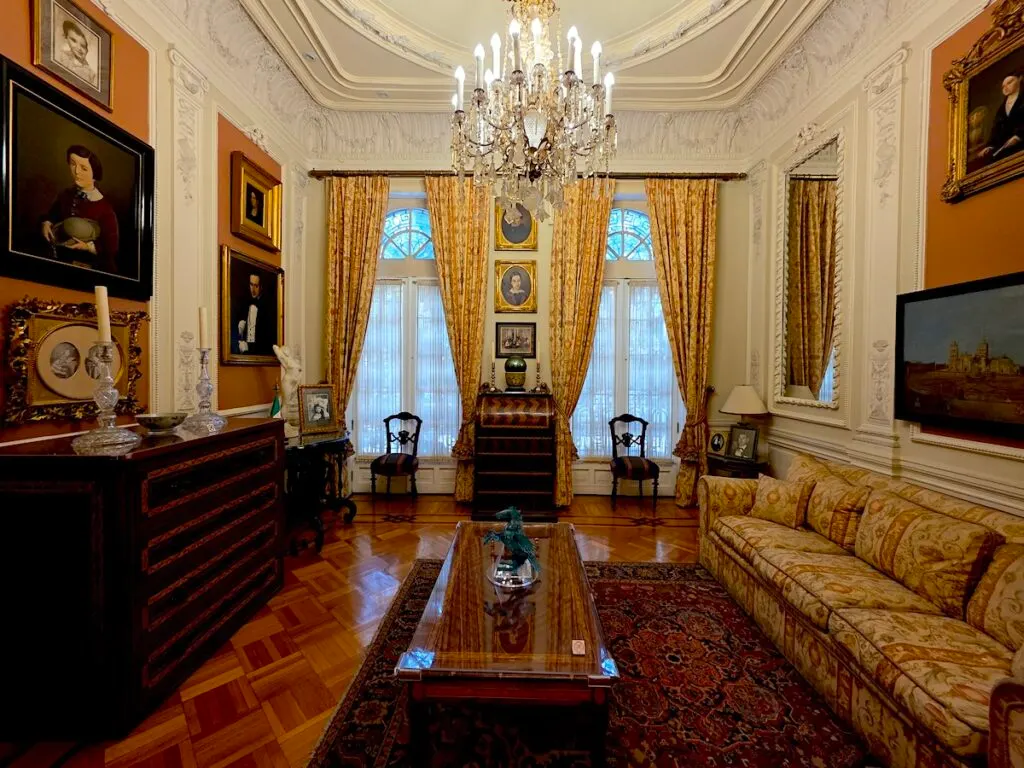
A visit to the Guillermo Tovar de Teresa Museum makes you feel like you’ve been invited into someone’s private home and not like you’re visiting a traditional museum.
Located in a beautiful colonial mansion near the historic center, this museum showcases the personal collection of Guillermo Tovar de Teresa.
In case you have no idea who this human was, Guillermo Tovar de Teresa was a renowned historian and passionate defender of Mexico’s cultural heritage.
So, walking through this free museum today, you really get a sense for his deep love for art, books, and history.
What makes this museum so special is the awesome variety of what is on display. After all, the rooms are filled with colonial-era paintings, sculptures, furniture, ceramics, and religious art.
They are all displayed in a way that feels intimate rather than overly curated.
So, one moment you’re admiring a finely detailed altarpiece, and the next you’re looking at shelves of old books and manuscripts that hint at a lifetime filled with research and curiosity.
The building itself is a must-see too, since it is overflowing with elegant staircases, tiled floors, and quiet courtyards that make you want to linger just a little bit longer.
It’s a calm, hidden oasis when compared to the busier museums nearby, which makes a visit feel even more special.
So, if you’re interested in Mexico’s colonial past and enjoy museums with a personal touch, the Guillermo Tovar de Teresa Museum is worth checking out.
19. Museo Jumex
I remember the very first time I visited Museo Jumex. It felt like stepping into a different world, one filled with light and minimalist decor.
Designed by the British architect David Chipperfield, the building itself features clean lines, natural light, and exudes a calmness that allows the art to take center stage.
Museo Jumex is the flagship home of the Colección Jumex, one of the most important contemporary art collections in Latin America.
It showcases works by both Mexican and international artists, including everyone from Damien Hirst and Andy Warhol to Gabriel Orozco, Tacita Dean, and Francis Alÿs.
So, when you stop by, you’ll get a real appreciation for how lively and varied contemporary art can be.
I also love how each exhibition feels fresh and thought-provoking. I know the last time I was here, I saw this immersive installation that played with time and perception.
It left me speechless and left me thinking about when I would come back again.
FYI, the museum also hosts exciting temporary shows that explore life, decay, and the sensory experience. So, yes, there always is something new to discover.
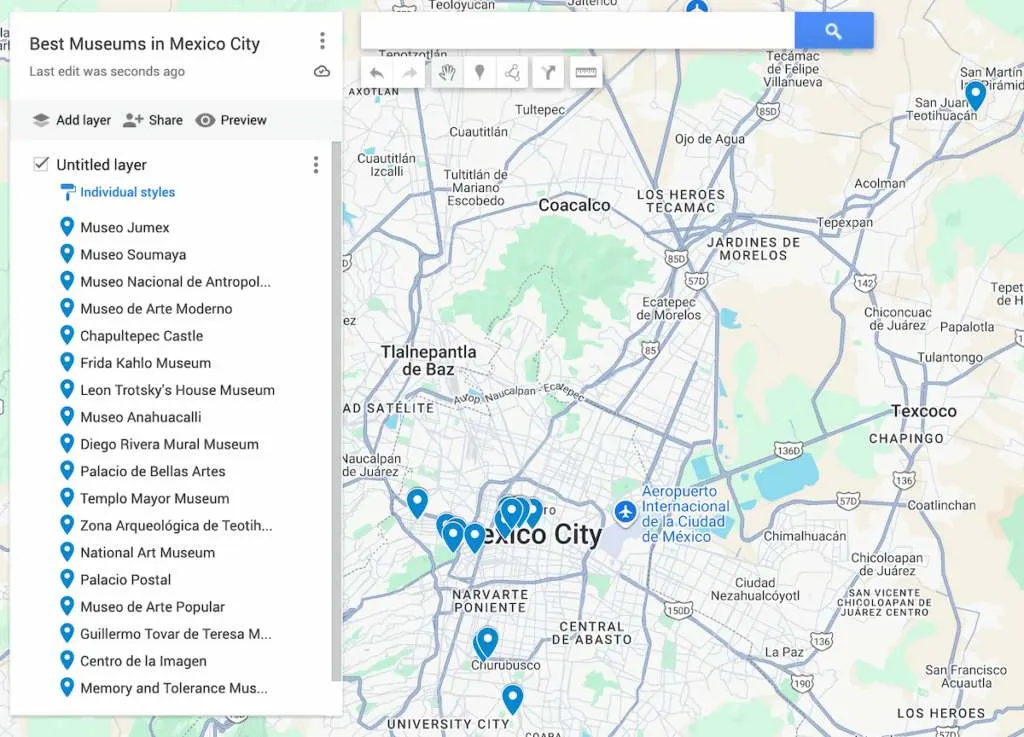
Map of the Best Museums in Mexico City

Conclusion
Mexico City has a way of turning a trip to a museum into a full-blown cultural marathon, and honestly, that’s part of the city’s magic.
Whether you’re standing in front of a Diego Rivera mural, wandering through a quiet courtyard full of history, or trying to figure out what contemporary art actually means, the museums here never get old.
Each one tells part of the city’s story, and together, they give you a deeper understanding of why CDMX is so endlessly fascinating.
What I love most is the variety. You can go from ancient civilizations to colonial mansions to cutting-edge modern art all in one day.
Add in the fact that many museums are free or low-cost, and it’s incredibly easy to build them into your itinerary without worrying about blowing your budget.
So take your time, follow your curiosity, and don’t worry about seeing everything. In Mexico City, the museums aren’t just places you visit — they’re experiences you feel.
And chances are, one of them will end up being the highlight of your entire trip.