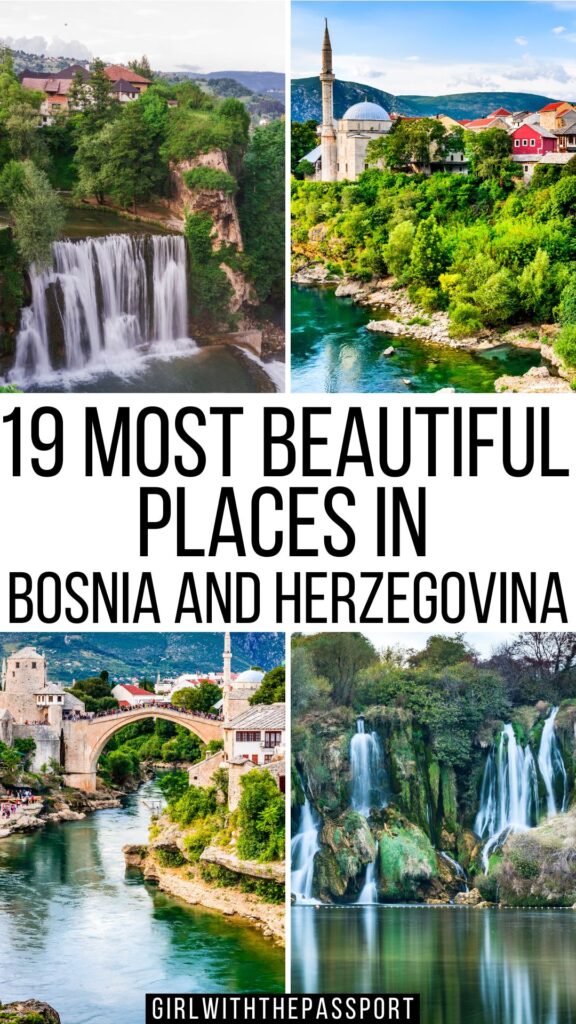
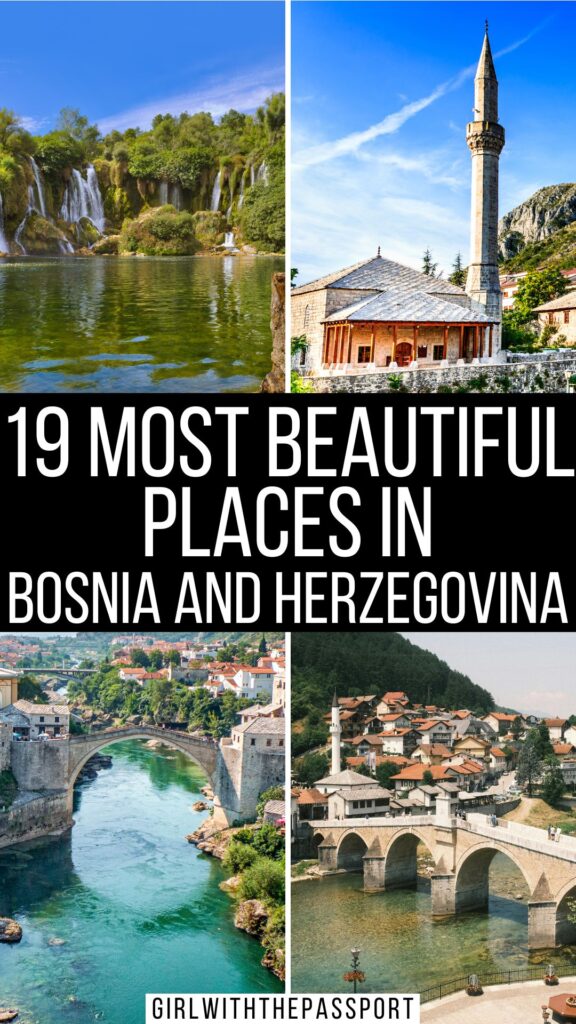
Desperately seeking the most beautiful places in Bosnia and Herzegovina? If so, then let me start by saying this one VERY important thing.
I have ZERO idea why more people aren’t talking about this country. Seriously.
Before visiting, I knew Bosnia had a famous bridge in Mostar, a tragic history, and… honestly, that was about it.
What I didn’t expect was to spend an entire Bosnia road trip wondering how a place this beautiful had somehow stayed off the radar while neighboring Croatia gets ALL the attention.
No offense, Croatia, you’re lovely. But you are overrun with tourists, and paying upwards of $45 USD to climb the walls of Dubrovnik was a bit much.
As a result, Bosnia surprised me in ways Croatia never did.
One day I was wandering through the Ottoman-era streets of Sarajevo, drinking coffee that could probably keep me awake for three days straight.
Yes, friends, strong is the understatement of the century.
Next, I was standing in front of the turquoise waters of Kravica Waterfalls, wondering why they weren’t all over Instagram.
Then there was Blagaj, where a centuries-old monastery sits beneath a towering cliff beside an almost impossibly blue river.
Honestly, half the time I felt like someone had created the scenery using Photoshop and forgotten to tell me.
What makes Bosnia and Herzegovina so special is the stark contrasts you’ll find here.
You’ll see Ottoman architecture, Austro-Hungarian influences, medieval villages, dramatic mountains, emerald rivers, and waterfalls that look like they belong in a National Geographic documentary.
Yup, pretty surprising considering how teeny tiny this country really is.
And somehow, it still feels authentic.
Even in more popular spots, I rarely felt like I was visiting places designed for tourists.
Instead, I found local bakeries selling fresh burek, family-run restaurants, quiet mountain roads, and some of the friendliest people in the Balkans. Yup, true story based on actual events.
That’s why I’m sharing my picks for all of the most beautiful places in Bosnia and Herzegovina. I want you to avoid the tourist traps and enjoy this country just like I did.
Highlights include historic cities, stunning waterfalls, mountain landscapes, and some truly incredible hidden gems in Bosnia and Herzegovina that deserve way more attention.
So, if you love underrated places in Europe, Bosnia might just become your next great obsession. Like a Game of Thrones level obsession.
Most Beautiful Cities and Historic Towns in Bosnia and Herzegovina
1. Mostar
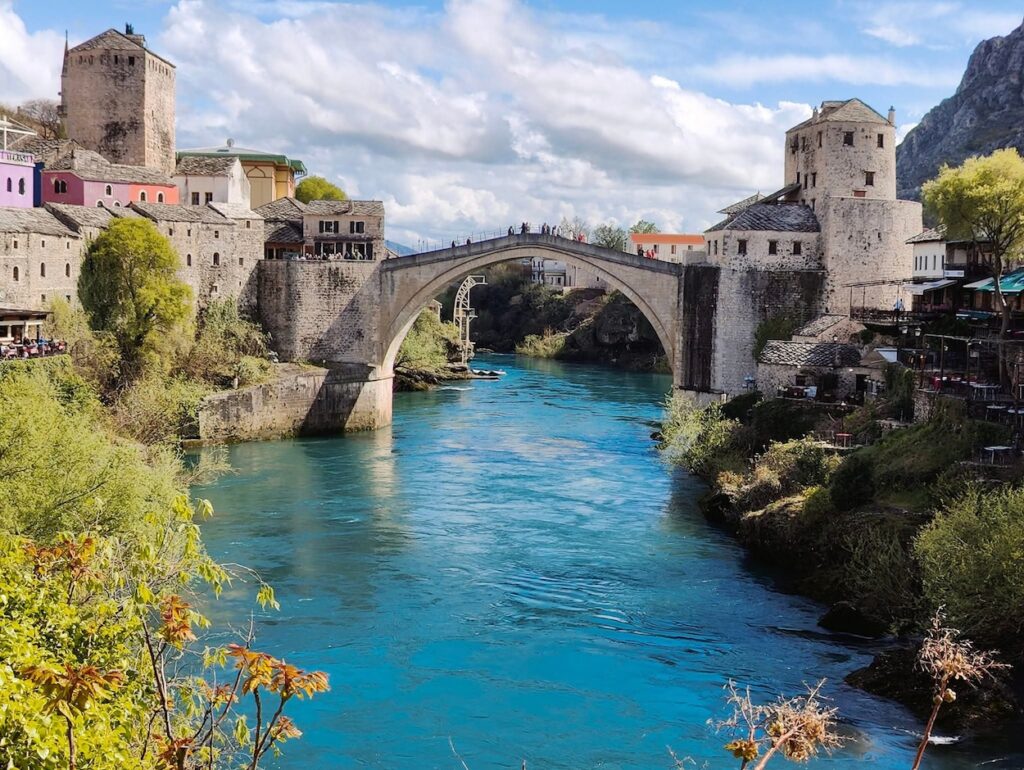
Mostar was the reason I originally wanted to visit Bosnia and Herzegovina.
Like many travelers, I’d seen photos of Stari Most for years and assumed the city would be beautiful.
What I didn’t expect was how much I’d end up loving basically everything else beyond the bridge itself.
The Old Town is a maze of cobblestone streets, Ottoman-era buildings, little craft shops, and cafés overlooking the Neretva River.
Yes, it’s touristy in places, but it never felt overly commercialized to me. But, yeah, let’s be real. This place is NOT a secret, and you will see tons of other people here.
This can get annoying since this town is pretty dang tiny.
But, one of my favorite memories was sitting at Urban Grill with a glass of local Žilavka wine. I watched the late afternoon light hit the stone bridge, and it felt like the entire city was glowing to life.
Of course, you’ll want to watch the bridge divers if they’re performing. The tradition goes back centuries, and seeing someone voluntarily jump into that freezing river is both impressive and mildly concerning.
I tried a cold plunge ONCE and quickly realized that that intense stinging feeling all over my body was not for me.
I stayed at Hotel-Restaurant Kriva Ćuprija, which ended up being one of my favorite hotels of the trip. The location was perfect, tucked away inside the Old Town but still quiet at night.
Additionally, I would not wear no grip shoes around the bridge.
Those stone streets are surprisingly slippery, and I saw tons of tourists almost do a face plant while they were casually strolling around. So, you have been warned.
Out of all the historic towns in Bosnia and Herzegovina, Mostar is probably the most famous. However, I can also enthusiastically say that it lives up to all the hype.
2. Sarajevo
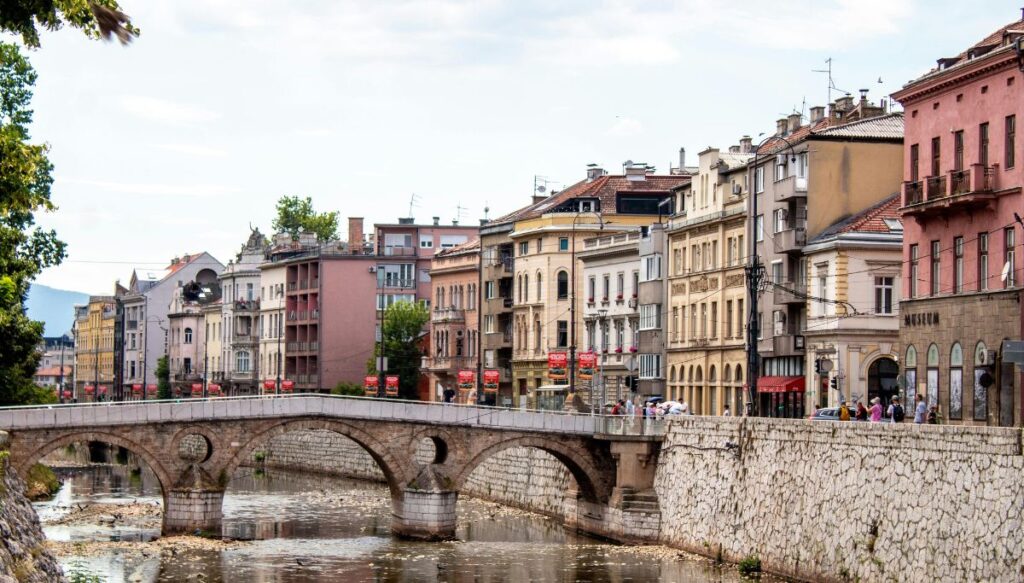
Sarajevo was the city that surprised me most.
I expected history. I expected culture. I expected good food. What I didn’t expect was how incredibly cool the city felt.
There’s something fascinating about a place where Ottoman bazaars, Austro-Hungarian architecture, communist-era buildings, and modern cafés all somehow coexist on the same street.
Walking through Baščaršija, Sarajevo’s old bazaar district, felt completely different from anywhere else I visited in the Balkans.
One afternoon I stopped at Ćevabdžinica Željo for ćevapi and immediately understood why people talk about it so much. It wasn’t fancy. It wasn’t trendy. It was just ridiculously good.
Later, I grabbed coffee at Ministry of Ćejf and spent an hour people-watching because Sarajevo has some of the best café culture EVER. Yup, it made this coffee lovers’ heart swoon.
The Tunnel of Hope Museum was probably the attraction that impacted me most.
Learning about the Siege of Sarajevo while standing inside part of the actual tunnel adds an emotional layer to the city that you don’t fully appreciate beforehand.
Yeah, this city has a VERY sad history that will definitely impact your stay. But I think it’s a very important thing to learn about.
If you’re planning a Bosnia itinerary, give Sarajevo at least two or three days. Most people rush through it, but there’s so much more here than the highlights.
Among the best cities in Bosnia and Herzegovina, Sarajevo feels like the heart and soul of the country.
It’s also super cool to see the religious diversity here with ancient churches and exquisite mosques all chilling together in one beautiful city.
3. Počitelj
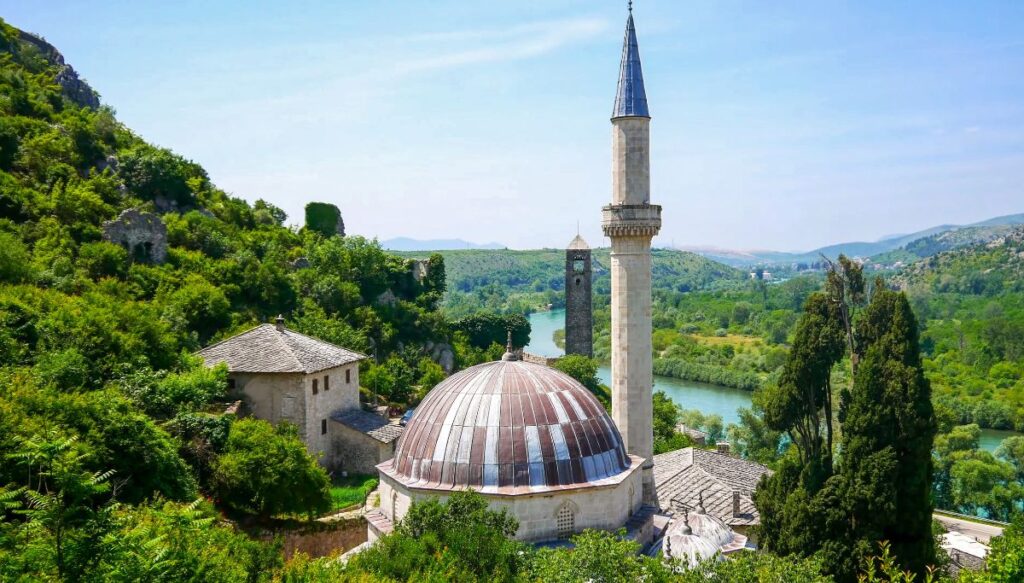
Počitelj feels like someone accidentally dropped a medieval village onto the side of a hill and then decided to leave it exactly as it was.
The entire town extends upward from the Neretva River, complete with stone houses, narrow staircases, historic mosques, and old defensive walls.
It honestly felt more like an open-air museum than a living and breathing local village.
What surprised me most was how peaceful it felt compared to Mostar. While plenty of day-trippers visit, the atmosphere remains super chill.
FYI, this is a great place to visit if you are in Mostar, since this town is only about a 30-minute drive away. Yup, gotta love small countries.
I spent a good part of the afternoon simply wandering through the stone alleys without much of a plan.
The highlight is definitely climbing to the fortress at the top. The views over the river valley are incredible, although the climb itself can be a bit of a workout, especially during summer.
My reward was a fresh pomegranate juice from one of the small stands near the entrance, which ended up being one of the best decisions I made all day.
One thing I’d recommend is stopping for lunch at Restaurant Han. The outdoor terrace overlooks the village and serves traditional Bosnian dishes that feel far more authentic.
It’s also probably one of the least touristy restaurants in the area.
Among the many hidden gems in Bosnia and Herzegovina, Počitelj may be my favorite because a visit here feels like going back in time, minus the crowds you find in similar places.
4. Trebinje
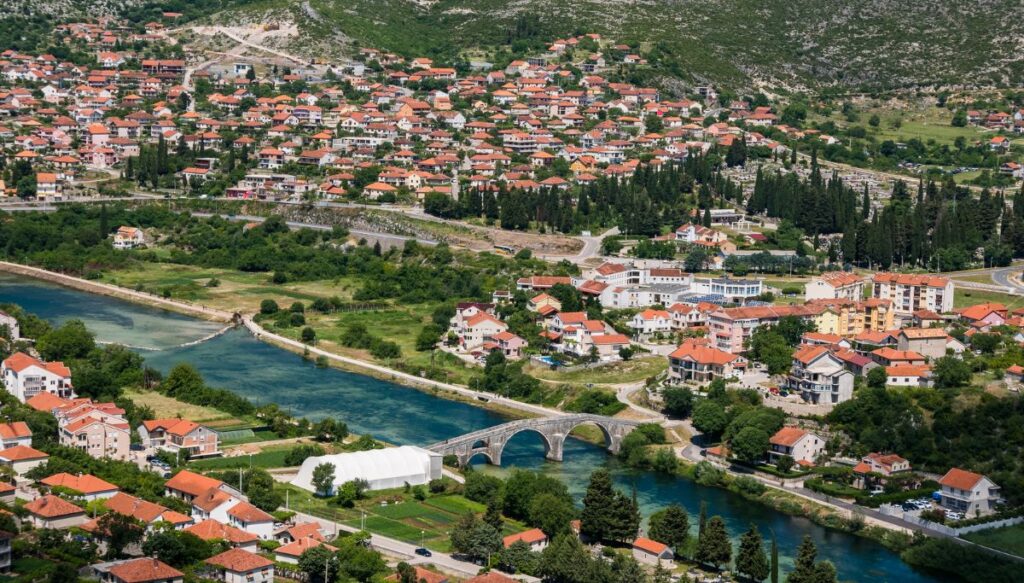
Trebinje was one of those places I almost skipped. And that would have been a huge mistake.
Located near the border with Croatia and Montenegro, Trebinje feels very different from Mostar and Sarajevo.
The city has a laid-back Mediterranean vibe that is enhanced by beautiful stone architecture and some of the prettiest café-lined squares I found anywhere in Bosnia.
Most mornings seemed to begin with coffee under the giant plane trees in the Old Town while locals casually spent hours chatting around me.
Honestly, it felt like everyone in Trebinje had collectively decided that rushing was unnecessary and that they’d just rather spend their days chillaxing like a champ,
One place I loved was Hercegovačka Gračanica, a Serbian Orthodox monastery sitting on a hill above the city.
The views from up there are fantastic, especially as the sun starts setting and the sky begins to change colors.
I also had one of my favorite meals at Studenac, a riverside restaurant where the trout was so good I briefly considered ordering a second portion despite already being beyond full.
Trebinje rarely appears on lists of the best cities in Bosnia and Herzegovina, which makes no sense to me.
It’s charming, affordable, scenic, and much less crowded than many better-known Balkan destinations.
5. Jajce
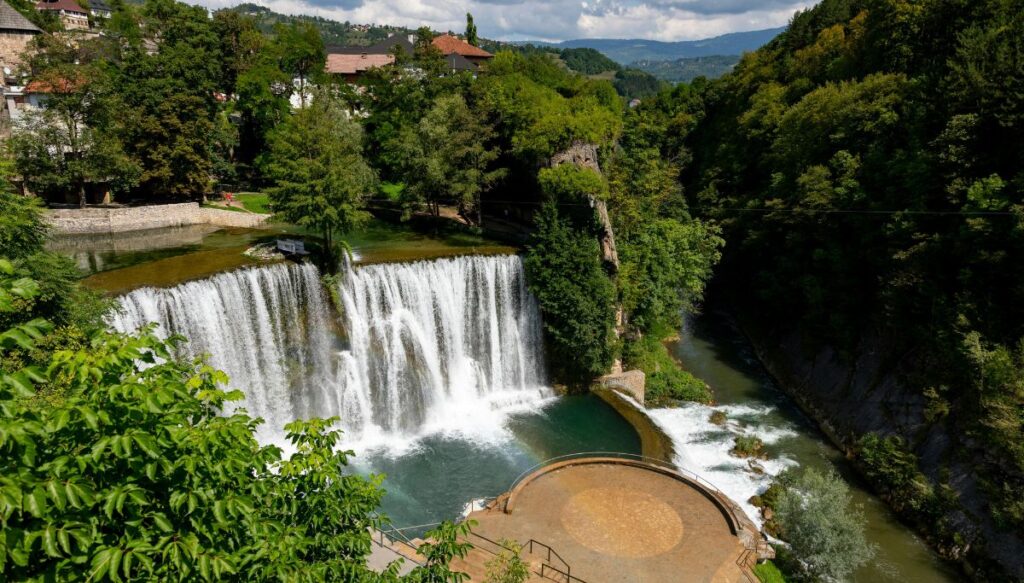
I don’t think I’ve ever visited another city where a waterfall is literally located in the center of town. Then again, I’d never been to Jajce before.
The first thing you’ll notice is the Pliva Waterfall crashing dramatically into the river right below the Old Town.
It’s one of those sights that immediately makes you stop in your tracks because your brain needs a second to process what’s happening.
But Jajce isn’t just about the waterfall. The city is packed with history.
There are medieval walls, a fortress overlooking the town, catacombs carved into rock, and enough scenic viewpoints to keep any Instagrammers out there busy for days.
One of my favorite experiences was visiting the Pliva Lakes just outside town.
The ancient wooden watermills in the area looked like something from a fairy tale, and the entire area felt a whole lot quieter than the center of Jajce.
For dinner, I ended up at Kod Asima and had a huge plate of grilled meat that probably could have fed two people.
Not gonna lie, the portions here were almost as big as what I would find in NYC. And trust me, that’s saying something.
Out of all the historic towns in Bosnia and Herzegovina, Jajce just feels unique. It combines history, nature, and scenery in a way that’s hard to find elsewhere.
And honestly, the fact that it still doesn’t receive nearly as many visitors as Mostar is a nice added bonus.
Most Beautiful Historic and Cultural Landmarks
6. Stari Most
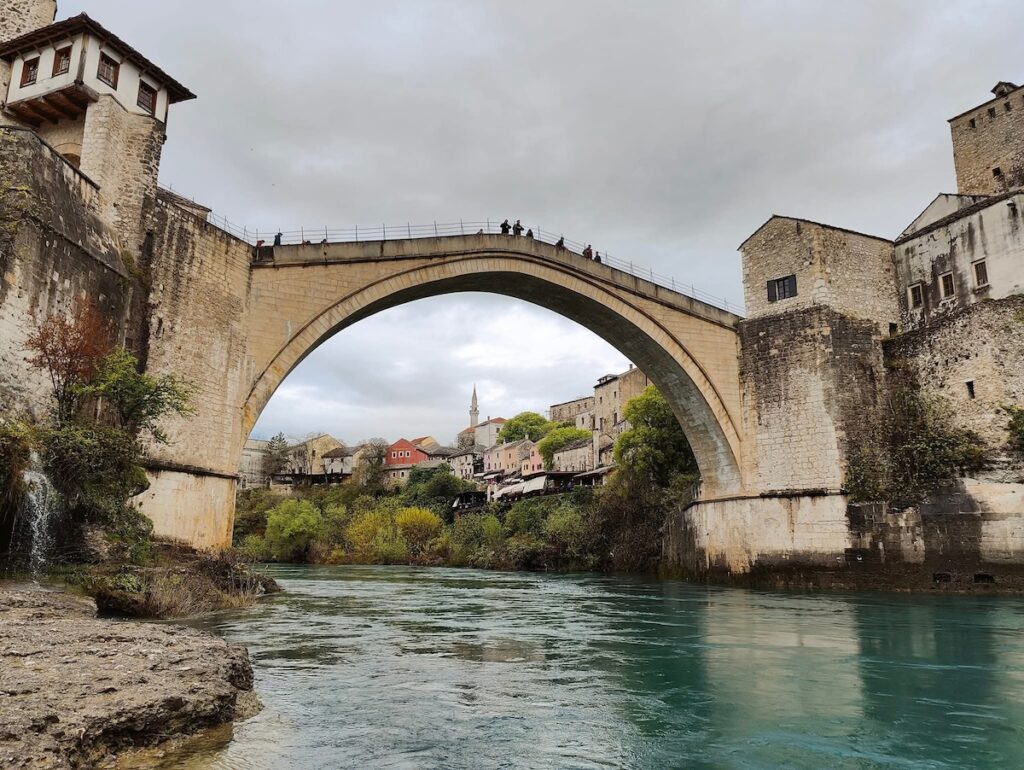
Before visiting Mostar, I thought Stari Most was going to be one of those landmarks that looks incredible in photos but ends up being a bit underwhelming IRL.
Well, I am delighted to say that I could not have been more wrong.
The bridge is stunning because of the way it arches dramatically over the emerald-green Neretva River. It’s one of those places that almost doesn’t look real.
But what surprised me most wasn’t the bridge itself, but how alive the entire area felt.
Street musicians played nearby, people in cafés spilled onto stone terraces overlooking the water, and locals casually walked across a structure that is easily one of the most recognizable landmarks in Bosnia and Herzegovina.
I ended up spending far more time here than planned. One afternoon, I grabbed a table at Restaurant Labirint and sat overlooking the bridge while eating a plate of stuffed peppers and watching tourists nervously lean over the edge.
Later, I climbed the minaret of the Koski Mehmed Pasha Mosque, which gave me my favorite view of Stari Most from above.
One thing most people don’t realize is that the bridge stones are incredibly slippery.
That’s because they have been polished smooth by centuries of footsteps, and walking across them feels a little like navigating an ice rink in dress shoes.
Moral of the story? Be careful when walking over the bridge or you may just end up flat on your ass.
7. Blagaj Tekke
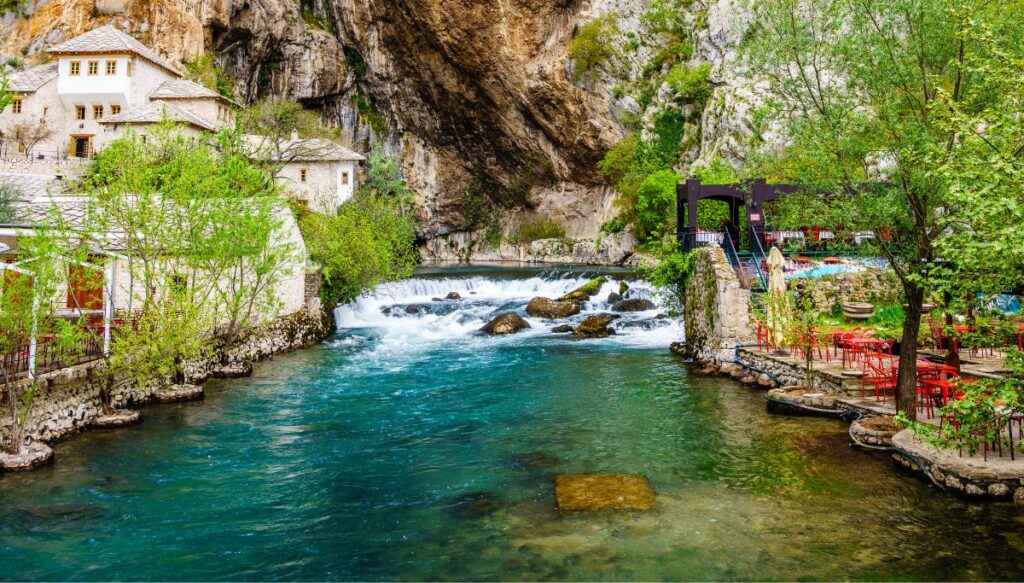
If someone showed me a photo of Blagaj Tekke, I probably would’ve guessed Turkey, Jordan, or maybe somewhere in Central Asia.
Instead, it’s hidden away in southern Bosnia. And it’s absolutely magical.
The monastery sits directly beneath a towering limestone cliff near the start of the Buna River, where crystal-clear water pours out of a cave so large it almost looks like the entrance to another world.
I had seen photos before visiting, but standing there in person was something else entirely.
Most people stop, take a few pictures, and leave. Don’t do that. To be fair, I was here as part of a day tour from Mostar, so I couldn’t really leave even if I wanted to (Lol).
One of the best things I did with my time was walk over to the opposite side of the river and have lunch at Restoran Vrelo.
The tables sit right by the water, and I ordered freshly caught trout that had probably spent more time in the river than on the menu. It was one of the best meals I had anywhere in the country.
If you’re feeling adventurous, you can also take a small boat into the cave itself. The ride only lasts a few minutes, but seeing where the water comes from inside the cavern is worth it.
Among all the landmarks in Bosnia and Herzegovina, Blagaj Tekke was probably the one that felt the most surreal.
8. Latin Bridge
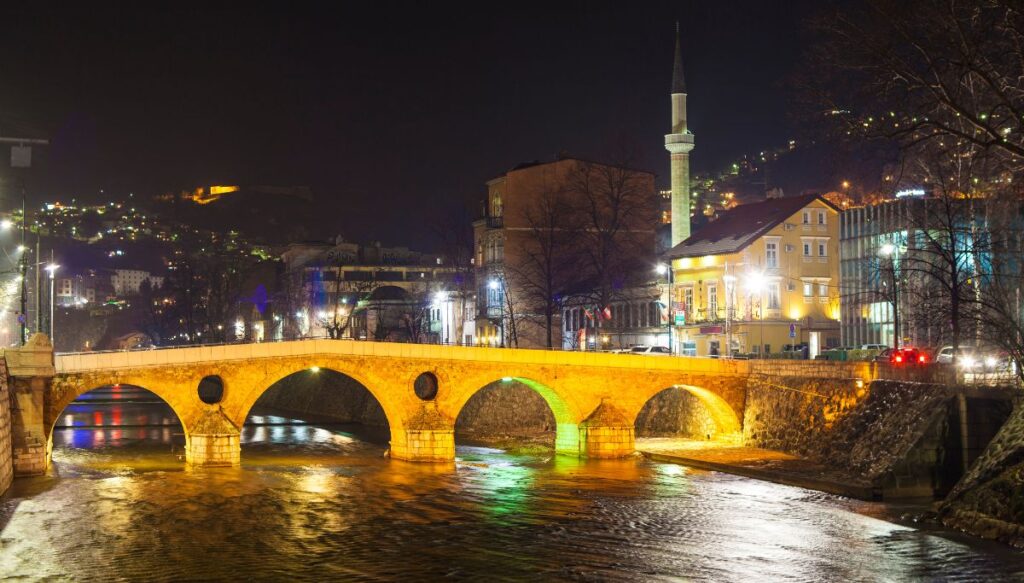
It’s strange visiting a place where a single moment changed the entire course of world history.
Standing on the Latin Bridge in Sarajevo, it’s hard to believe that what appears to be a fairly ordinary stone bridge became the site of one of the most significant events of the 20th century.
In case you aren’t a history buff, this is where Archduke Franz Ferdinand was assassinated in 1914. It was this event that triggered a chain of events that led to World War I.
But here’s what surprised me. The bridge itself isn’t treated like some giant tourist attraction. Life simply moves around it, and it feels pretty ordinary when you’re walking around Sarajevo.
Locals cross it on their way to work. Trams rattle past nearby. People sit at cafés overlooking the Miljacka River. In many ways, that’s what makes the experience feel so powerful.
After visiting the nearby Museum of Sarajevo 1878–1918, I walked along the river toward Baščaršija and stopped at the Ministry of Ćejf for Bosnian coffee.
If you can, visit the Latin Bridge as part of a walking tour of Sarajevo. The city has such a layered history that seeing the bridge without understanding the broader context doesn’t quite do it justice.
TBH, the bridge really doesn’t feel like a big deal unless you really understand the history behind it.
For travelers interested in Bosnia’s history, few places are more important than this.
And while it may not be the most visually stunning landmark, it may very well be one of the most historically important.
9. Mehmed Paša Sokolović Bridge
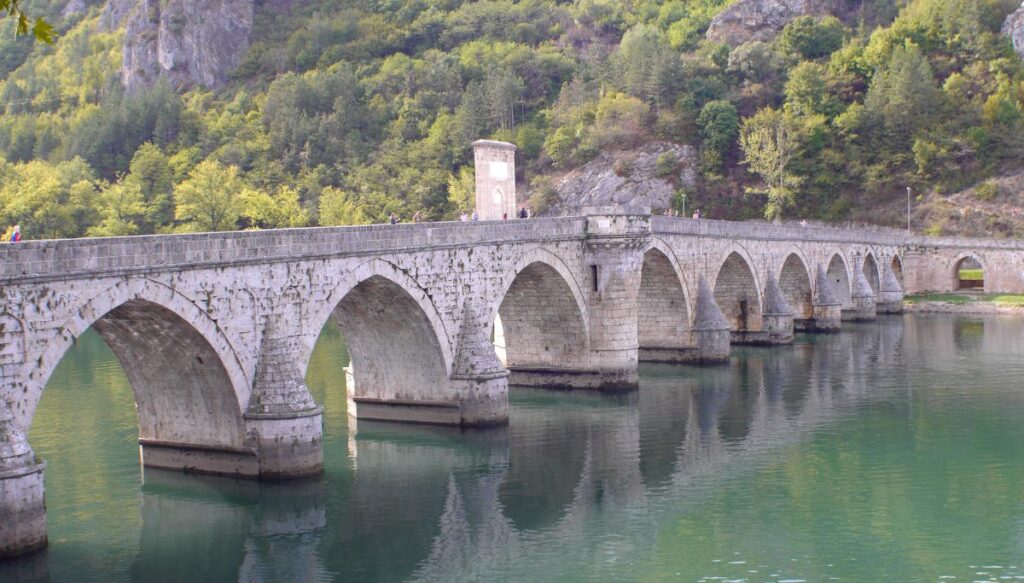
Located in Višegrad, the Mehmed Paša Sokolović Bridge stretches elegantly across the Drina River and somehow manages to feel both grand and peaceful at the same time.
Built in the 16th century by the famous Ottoman architect Mimar Sinan, it’s considered one of the greatest examples of Ottoman architecture in Europe.
And honestly, it deserves that reputation and looks like it belongs in a Game of Thrones episode.
The bridge is beautiful from every angle, but my favorite view came from walking along the riverbank just before sunset.
The reflection of the stone arches in the water was incredible, and, to my delight, hardly anyone was around.
I also spent some time exploring nearby Andrićgrad, a quirky stone town built by filmmaker Emir Kusturica. It’s an unusual spot, but worth checking out if you’re already in Višegrad.
One thing I’d recommend is staying overnight if possible. Most people basically stop by, snap a few photos, and leave.
But once the crowds disappear and the bridge quiets down, the atmosphere changes dramatically.
For me, this was one of those destinations that perfectly captures why Bosnia rewards slow travel. It may not be the most famous place in Bosnia, but it ended up being one of the most memorable.
Most Beautiful Nature Spots in Bosnia and Herzegovina
10. Kravica Waterfalls
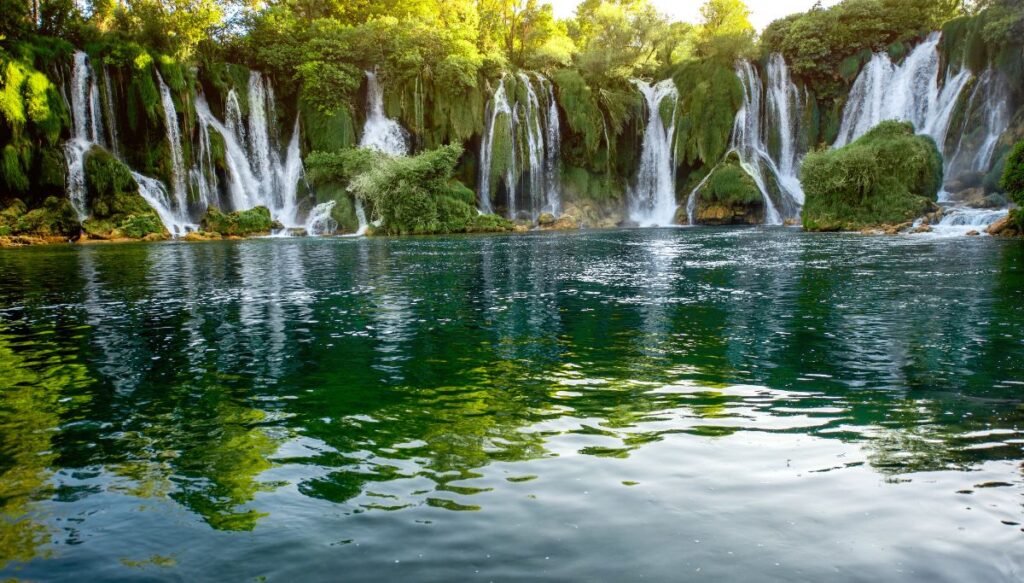
I knew Kravica Waterfalls were supposed to be beautiful, but I was not prepared for how beautiful they would really be.
There was hardly anyone here when I stopped by. But that may be because I visited in the off-season.
Anyway, my first glimpse of the falls from the walking path genuinely stopped me in my tracks.
A massive semicircle of waterfalls tumbles into a turquoise swimming hole surrounded by dense greenery.
TBH, the whole scene feels more like something you’d expect to find in Thailand than in Bosnia and Herzegovina.
I visited as part of a day trip from Mostar and ended up staying far longer than planned.
Once you get down to the base of the falls, there are swimming areas, walking trails, small cafés, and plenty of places to sit and admire the view.
During warmer months, the water is surprisingly refreshing, although “refreshing” may be a nice way of saying the water is “shockingly cold.”
Full disclosure, I did not swim but heard stories about the water temperature. Yeah, I regret nothing.
One thing I highly recommend is having lunch at one of the riverside restaurants near the falls.
I ordered grilled trout and spent nearly an hour sitting beside the water, wondering why Kravica wasn’t as famous as Plitvice Lakes in Croatia. Same vibe but WAY fewer people.
For photographers, the best viewpoints aren’t actually at the bottom. Some of my favorite photos came from the trails overlooking the falls. After all, nothing beats a sweet sweet aerial shot.
Out of all the waterfalls in Bosnia, Kravica is easily the most famous, and that totally makes sense once you visit.
11. Una National Park
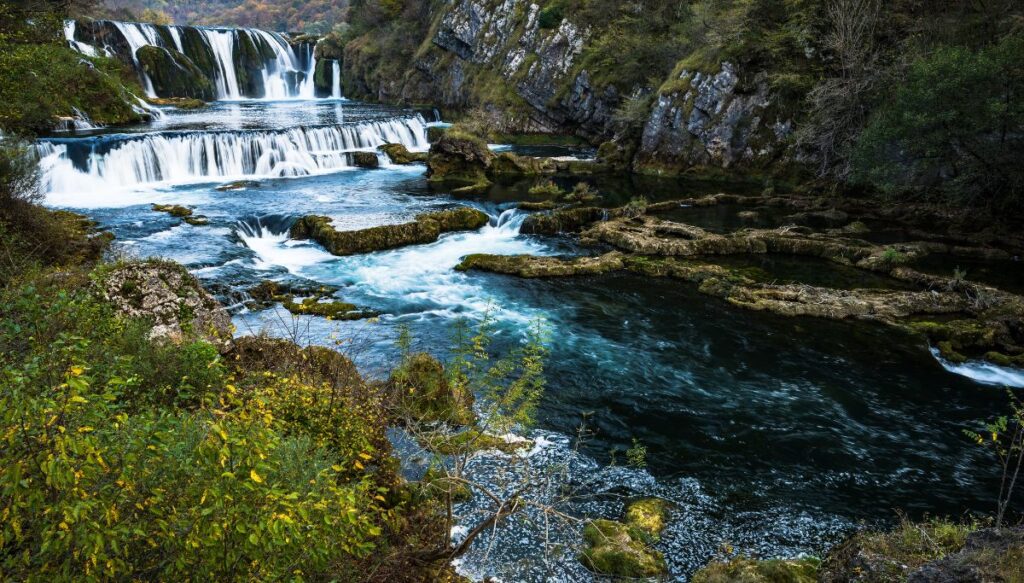
Una National Park is one of Bosnia’s best-kept secrets.
In fact, if this park were located in Western Europe, I have no doubt it would be overrun with tourists. Instead, I spent much of my visit skipping around in delight because no one was there.
The star attraction is Štrbački Buk, a spectacular series of waterfalls along the Una River that are breathtaking. Sorry, Croatia, but these waterfalls are better because no one was around.
The water here is unbelievably clear. At certain points, it almost looks artificial because the water is just such an intense shade of blue.
I based myself in Bihać for a couple of nights and used it as a base from which to explore the park.
One of the highlights was simply driving along the river and stopping whenever a scenic viewpoint caught my attention.
Yeah, Bosnia has a way of making unplanned stops become some of the best parts of the trip.
For dinner, I loved River Dock in Bihać, where I had local trout (yup, trout is a thing here) overlooking the water after a long day of exploring.
When people think about Bosnia’s nature, they often picture mountains. But Una National Park proves the waterfalls here are pretty rad too.
It’s one of the most beautiful national parks in Bosnia and Herzegovina and one of the country’s most underrated outdoor destinations.
12. Prokoško Lake
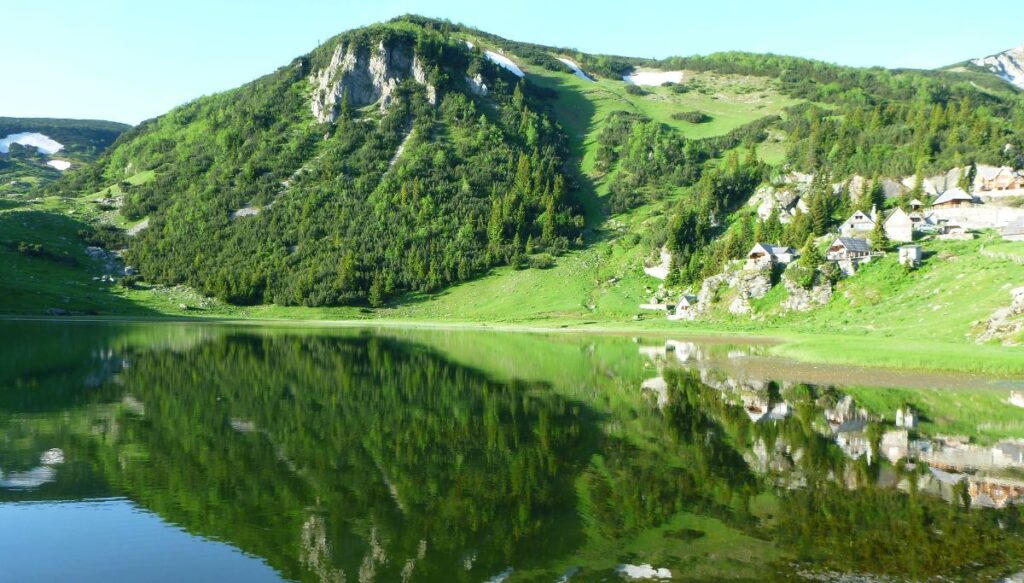
Prokoško Lake was one of those places that felt disconnected from the modern world.
Added bonus? Getting there is part of the adventure in and of itself.
The road leading up to the lake is rough, bumpy, and occasionally makes you question whether Google Maps secretly hates you and ask why God smote you.
But by the time I arrived, I felt like I’d earned the scenery. And thankfully, the scenery delivered and the entire trip wasn’t in vain.
After all, the lake sits high in the Vranica Mountains and is surrounded by rolling green hills, traditional shepherd huts, and grazing livestock.
The setting feels peaceful in a way that’s becoming difficult to find in Europe.
What I loved most wasn’t necessarily the lake itself but the atmosphere. People weren’t rushing around trying to check attractions off a list.
Families were picnicking. Hikers were relaxing after a long trek. The entire area felt refreshingly slow-paced.
I stayed for lunch at one of the simple local restaurants near the lake and had homemade pita that tasted infinitely better after bouncing around various mountain roads for an hour.
For anyone interested in hiking in Bosnia and Herzegovina, there are numerous trails surrounding the lake that feature incredible views of the surrounding mountains.
13. Sutjeska National Park
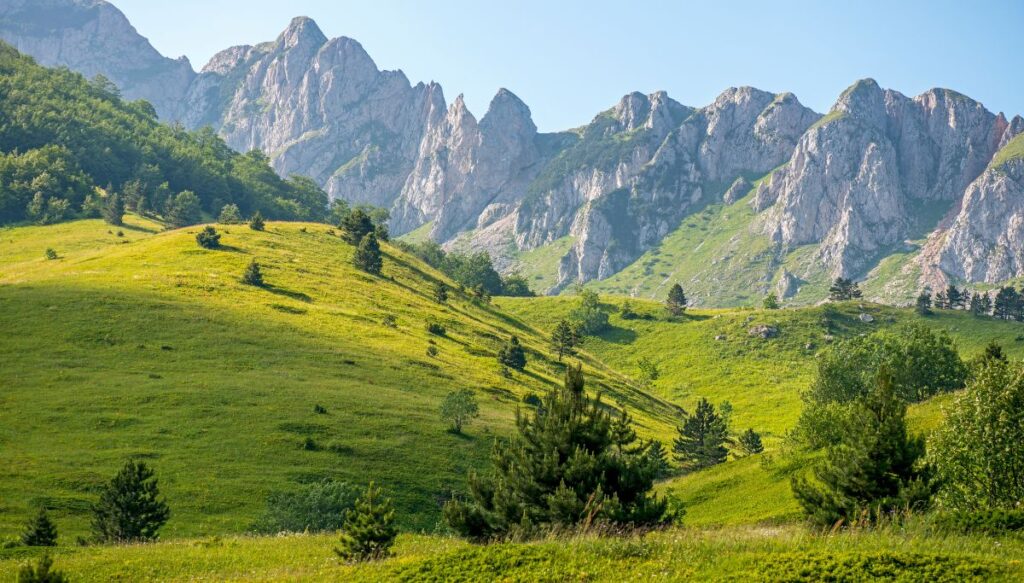
Sutjeska National Park is the kind of place that makes you wonder why more people don’t visit Bosnia.
This is the country’s oldest national park and home to some of the most dramatic scenery I saw throughout my trip.
Towering mountains, deep valleys, dense forests, and alpine lakes create scenery that feels almost untouched.
The highlight for many visitors is Perućica Forest, one of the last remaining primeval forests in Europe.
Standing at the Dragoš Sedlo viewpoint overlooking the forest was one of those moments where photos simply don’t do justice to what you’re seeing. And the total scale of everything was incredible.
I also hiked to Skakavac Waterfall, which plunges deep into the forest below. The trail wasn’t particularly crowded, which was amazing considering how spectacular the scenery was.
One thing worth noting is that services inside the park can be limited compared to more developed areas. So, bring snacks and water, and basically come prepared since services are limited.
When people talk about national parks in Bosnia and Herzegovina, Sutjeska should always be part of the conversation. It’s wild, rugged, and exactly the kind of place outdoor lovers dream about.
14. Prenj Mountains
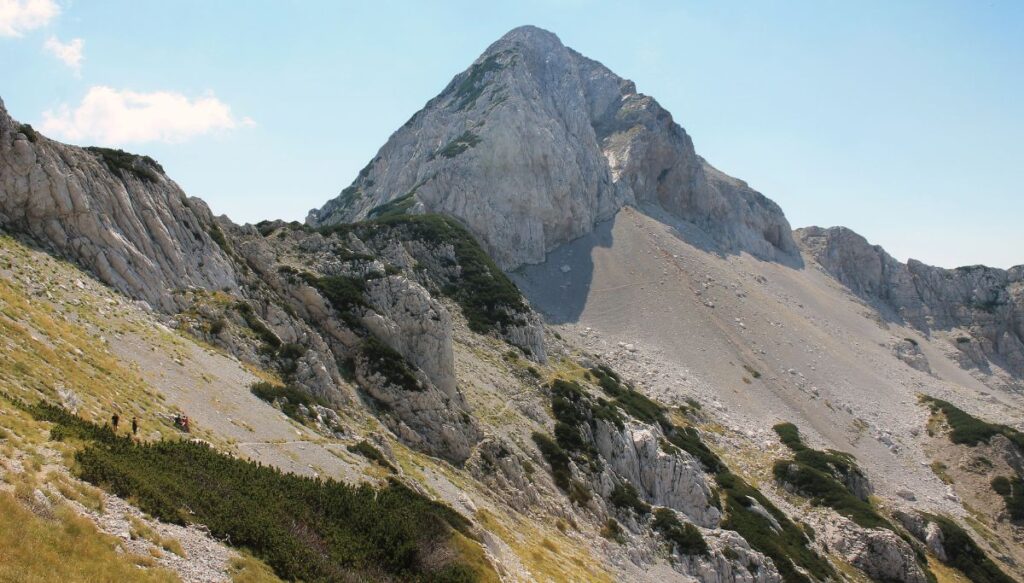
The Prenj Mountains are often referred to as the “Bosnian Himalayas.”
After visiting, I can confidently say that while they may not be quite THAT large, they are super dramatic.
Unlike some of Bosnia’s more accessible nature destinations, Prenj feels rugged and adventurous.
Jagged limestone peaks dominate the landscape, and many of the trails require a bit more effort than your average afternoon stroll. Which is probably why I adored my time here.
I spent part of a day hiking near Rujište and quickly realized why experienced hikers speak so highly of this region.
Every time I thought I’d reached the best viewpoint, another one appeared around the next corner.
What makes Prenj special is the scale of it all. The mountains feel big, wild, and surprisingly remote considering how close they are to Mostar.
There were moments when I could look in every direction and see nothing but peaks and valleys in the distance.
FYI, if you’re planning a longer hike, download offline maps beforehand. Cell service can be unreliable once you’re deeper in the mountains, and you absolutely do not want to get lost.
For travelers interested in serious hiking in Bosnia and Herzegovina, Prenj is arguably the country’s premier mountain destination.
Hidden Gems in Bosnia and Herzegovina
15. Kravice Monastery
Most people visiting southern Bosnia have heard of Kravica Waterfalls. But, very few of those same people seem to know about Kravice Monastery. And honestly, that’s part of the charm.
Located not far from the waterfalls, this Serbian Orthodox monastery sits quietly among vineyards in the rolling countryside.
So, it feels completely removed from the crowds that gather at nearby tourist attractions. I discovered it almost by accident while exploring the region and ended up sticking around.
The setting is beautiful. Stone buildings, peaceful courtyards, and surrounding hills create the kind of atmosphere that immediately makes you slow down.
Unlike some religious sites that feel heavily geared toward tourism, this still feels like an active place of worship first and an attraction second.
What I remember most wasn’t a specific building but the silence. After days spent exploring vibrant cities, sitting beneath the trees here felt incredibly relaxing.
If you’re visiting Kravica Waterfalls, this makes a fantastic addition to your trip.
Most tourists never make the short detour, which means you’ll have much of the monastery to yourself.
Among the lesser-known hidden gems in Bosnia and Herzegovina, this place is beautiful, peaceful, and still flying completely under the radar.
16. Lukomir
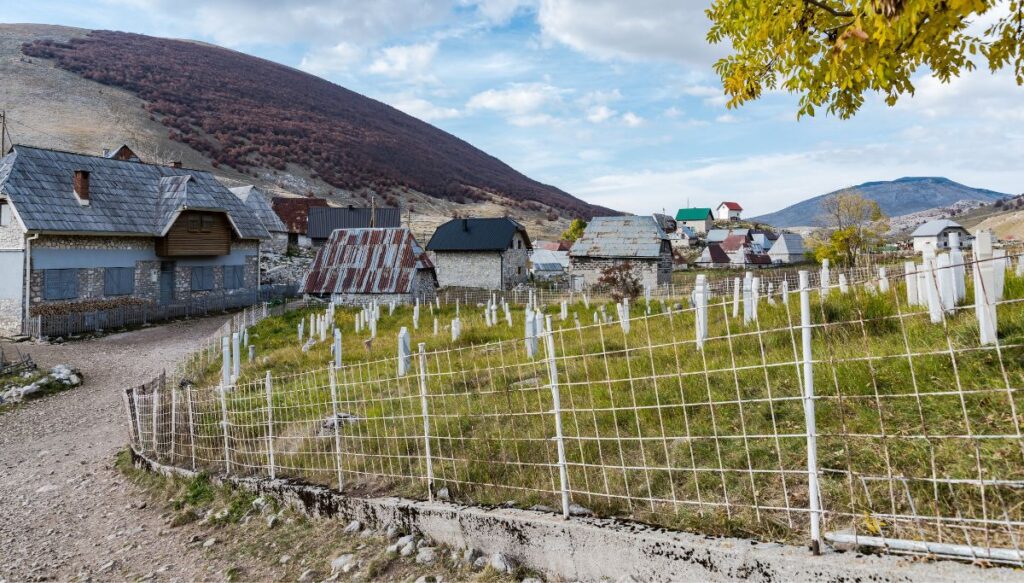
Lukomir wasn’t just one of my favorite places in Bosnia. It was one of my favorite places in the Balkans.
Perched high on the edge of Bjelašnica Mountain, this tiny village is often described as the highest and most traditional village in Bosnia and Herzegovina.
After visiting, I can confirm that it feels like you hopped in a DeLorean and traveled back in time.
The road there alone is unforgettable. As the mountains open up and Lukomir finally comes into view, surrounded by dramatic peaks and deep valleys, it’s impossible not to be amazed.
The village itself is small, with stone houses topped by traditional metal roofs and spectacular views over Rakitnica Canyon.
I spent most of my time simply wandering through the village and talking with locals sitting outside their homes. Life moves slowly here, and that’s why this place is uber special.
One of the highlights was lunch at a small family-run guesthouse where I had homemade pita and strong Bosnian coffee while looking at the canyon below.
If I had one piece of advice, it’s that you shouldn’t rely entirely on Google Maps for the final stretch of the drive. The roads can be rough, and the route may change depending on the season.
Out of all the underrated places in Bosnia and Herzegovina, Lukomir is hella authentic.
17. Vjetrenica Cave
I’ve visited quite a few caves during my travels. Most of them start to blur together after a while. Vjetrenica Cave did not.
Located in Herzegovina near the Croatian border, this massive cave system stretches for miles underground and feels surprisingly wild compared to many of Europe’s more commercialized caves.
The name literally translates to “wind cave,” and you’ll quickly understand why when cool air starts rushing past you near the entrance.
Inside, the cave is filled with underground chambers, fascinating rock formations, and hidden streams. But what makes Vjetrenica particularly unique is its biodiversity.
Scientists have identified an incredible number of species living inside, many of which are found nowhere else in the world. Pretty cool huh? You go, Bosnia!
The temperature remains cool year-round, which feels amazing after spending a hot summer day exploring Bosnia and Herzegovina.
For once, I actually came prepared an extra layer and was happy about it.
One thing I appreciated was how natural the experience felt. There are walkways and guided tours, but it still retains a sense of peace and tranquility that many larger cave attractions have lost.
If you’re looking for unique things to do in Bosnia and Herzegovina beyond the usual Mostar and Sarajevo itinerary, Vjetrenica is absolutely worth the detour.
18. Ramsko Lake
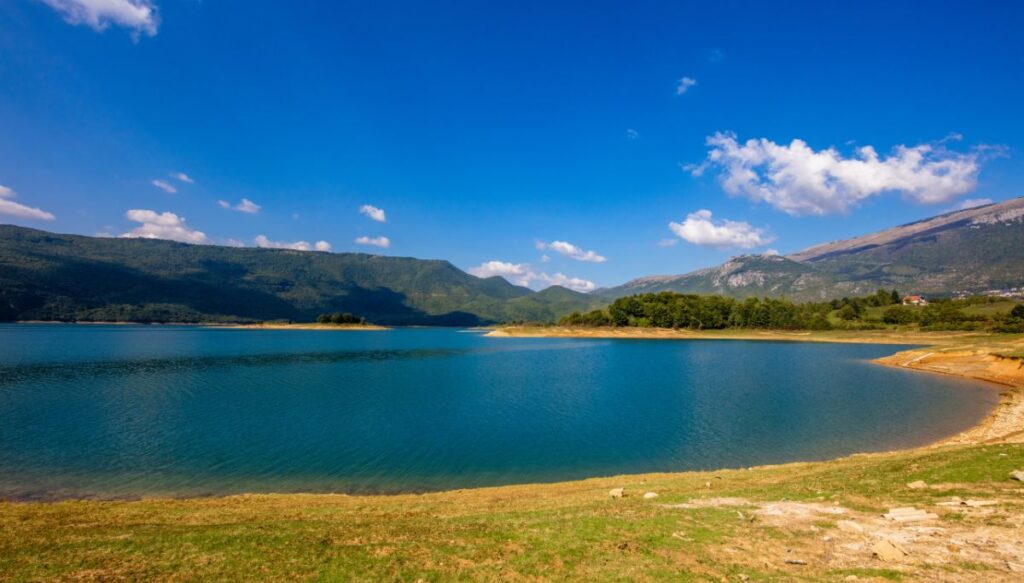
If Bosnia ever decides to start aggressively marketing itself to photographers, Ramsko Lake should probably be on the front page of every tourism brochure.
This place is stunning.
Located in central Bosnia, the lake is famous for its brilliant blue water and the tiny island monastery that appears to float in the middle of it.
The first time I saw it from one of the surrounding viewpoints, I actually pulled over without thinking because the scenery was so unexpectedly beautiful.
Now, one of the best views is located along the roads overlooking the lake. It’s truly stunning and a place that surprised me in the best possible way.
FYI, the Franciscan monastery on Šćit Peninsula is worth visiting too. The peaceful setting combined with the surrounding mountains creates an atmosphere that’s difficult not to love.
I ended up having lunch at Restaurant Mediteran near Prozor, where the terrace overlooks the surrounding countryside.
It was one of those long, leisurely Balkan-style lunches where nobody seemed remotely concerned about how much time had passed.
Among the off-the-beaten-path Bosnia destinations I visited, Ramsko Lake was one of the biggest surprises because it receives so little attention despite being super duper photogenic.
19. Štrbački Buk
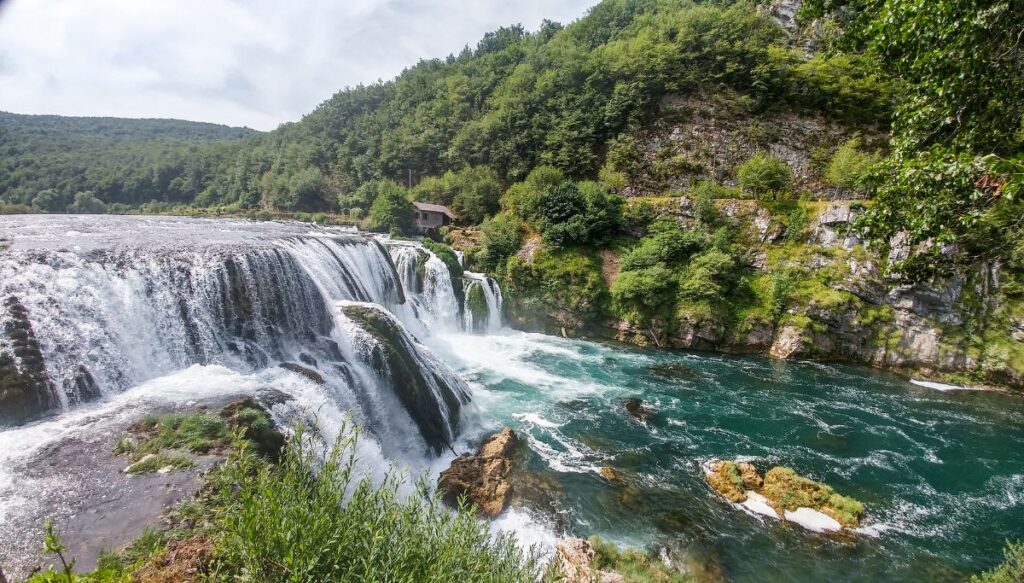
If Una National Park is Bosnia’s crown jewel, then Štrbački Buk is the diamond sitting right in the middle of it.
This spectacular waterfall is easily one of the most beautiful natural attractions in the country and somehow still doesn’t receive the recognition it deserves.
This mega epic waterfall cascades down multiple levels before crashing into the crystal-clear Una River below.
The combination of turquoise water, dense forest, and dramatic rock formations creates scenery that literally blew me away. To say I did not expect this from Bosnia is putting it lightly.
I visited after spending several days in Bosnia and Herzegovina, and the completely different landscape reminded me just how diverse the country is.
One day you’re exploring Ottoman towns and Mediterranean-style scenery. Next, you’re standing in front of a waterfall surrounded by vast forests.
The wooden pathways around the falls make for excellent viewpoints, but I found some of my favorite photos came from just walking farther along the river and looking back toward the waterfall.
If you plan on spending time in Bihać, dedicate a full day to exploring Una National Park rather than just making a quick stop at the waterfall. The park is magical and well worth your time.
Of all the hidden gems in Bosnia and Herzegovina, I’m surprised that Štrbački Buk isn’t uber-famous yet.
It feels like exactly the kind of place that would be overrun with visitors if it were basically anywhere else in Europe.
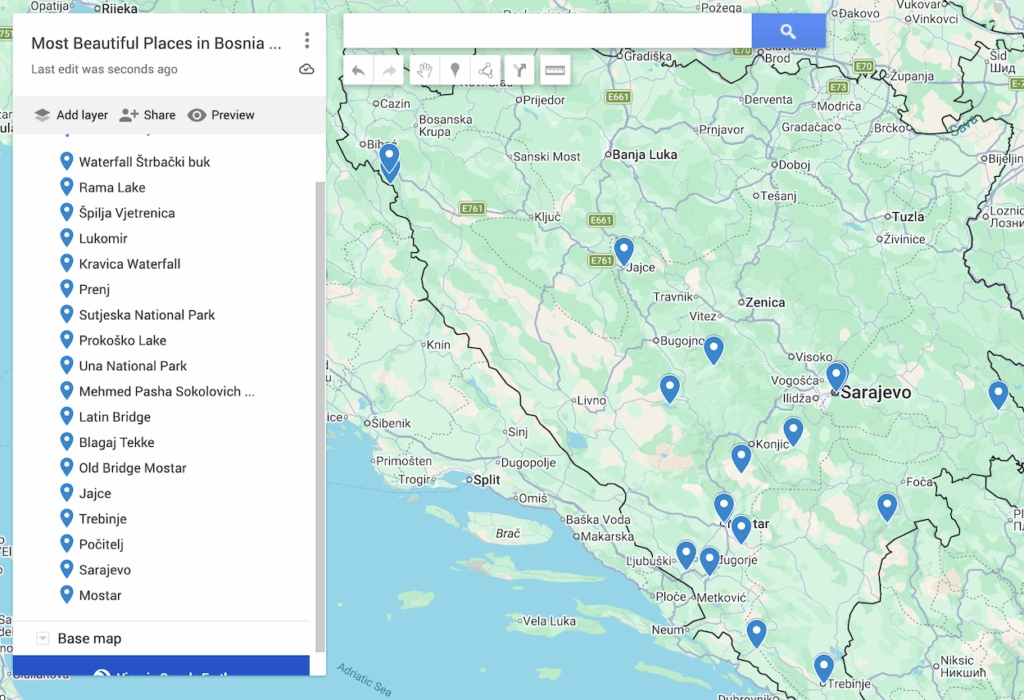
Map of the Most Beautiful Places in Bosnia and Herzegovina
Conclusion
After spending time exploring Bosnia and Herzegovina (not nearly enough, I might add), I can honestly say it’s one of the most surprising countries I’ve ever visited.
Sure, I expected it ot be beautiful. I mean, I don’t live under a rock and deffo use Instagram.
No, what I didn’t expect was how many awesome things I would find packed into such a small country.
Within a single trip, I explored Ottoman old towns, stood beneath waterfalls that looked like something out of a national park brochure, explored mountain villages that felt frozen in time, and drank coffee in cities where East and West seemlessly blend together in the most fascinating way.
What stayed with me most weren’t the famous attractions, though places like Mostar, Sarajevo, and Kravica Waterfalls absolutely lived up to the hype.
It was the feeling of discovering somewhere that still feels genuine. In a lot of Europe, it’s becoming harder to find destinations that haven’t been polished, packaged, and redesigned for tourism.
Bosnia feels different. People still chill in local cafés for hours. Family-run restaurants still serve recipes that have been passed down through the generations.
Tiny villages sit quietly in the mountains without having a souvenir shop on every corner. It feels real.
That’s why, the most beautiful places in Bosnia and Herzegovina aren’t just beautiful because of their scenery.
They’re beautiful because they still have a sense of authenticity that’s becoming increasingly rare.