
11 p.m. is early in Seville. Restaurants are noisy and full, kids are running around, and people are wandering off to music bars and flamenco venues. It’s wild, confusing, and intoxicating all at once.
Back home, that’s well past most people’s bedtime, but the Spanish live by a very different set of rules.
Unfortunately, I wasn’t in a restaurant or heading to a bar. I was tired, jet-lagged, a little tipsy, and trying to find my way back to the tiny apartment I’d rented.
The problem was my phone was on 4%. Google Maps only showed a blue dot floating in a void, and I was lost. In Seville. On my first night.
How did I get myself into this situation?

I’m an independent woman. An experienced traveler, brave, clever, and, as it turns out, rather good at overestimating myself.
I’d made three mistakes. The fact that I’d made them all before dinner was impressive, even to me.
First, I didn’t sort out any data before I flew. I figured I’d deal with it when I landed. I did not deal with it when I landed.
Second, I used the airport Wi-Fi to load the route to my apartment while drinking a café con leche, and assumed the route would just stay there.
Third, and perhaps most remarkable of all, I’d managed to spend the afternoon taking roughly 400 photos of orange trees and numerous videos of Plaza de España, because apparently your girl has never seen a tree or a building before.
My battery was begging for mercy, the way my credit card did when I booked the trip.
To top it off, I ate late because I wanted to blend in, and wandered into the old Santa Cruz quarter, where the streets were clearly designed before maps were invented.
Now, Santa Cruz is gorgeous during the day. Whitewashed buildings, flower-filled balconies, little squares, and narrow streets make it feel like a film set.
At night, with a dying phone, it’s basically a medieval escape room.
Every alley looks familiar. Every corner leads somewhere unexpected. And every time you think you’ve found your way out, you somehow end up beside the same restaurant.
I passed one guitarist three times. By the third encounter, I think he recognized me.
The moment I realized I was properly lost

There’s a difference between being slightly confused and genuinely lost.
For me, that moment came when I stopped walking and realized I couldn’t remember the name of the street where I was staying. I remembered the apartment had a blue door. Excellent detective work, Sherlock.
Unfortunately, Seville has rather a lot of beautiful doors. I opened Google Maps again. The blue dot was still floating in nothingness. My battery dropped to 3%.
I considered calling my best friend, but she was thousands of miles away. Besides, her main contribution would probably have been telling me to stop being dramatic.
For once, I decided not to make things worse by walking randomly. I needed help.
Okay, so tell us how you got back
Thankfully, I was a Girl Scout in my youth, so, taking into account the time, the moon’s position, and Seville’s latitude, I was able to ask a waiter at a nearby restaurant for help.
Being a good Scout, I actually had the apartment address screenshotted. I showed him the picture using the last of my battery, and he drew me a map on the back of a napkin. An actual paper map. In 2026.
Trying not to think about how I’d just given a stranger my address, I thanked him and followed his directions like I was on a scavenger hunt.
Left at the square, right after the church, straight ahead until the street widened. Fifteen minutes later, I recognized my blue door.
I was tucked into bed by midnight, feeling ridiculously proud of myself for successfully returning to an apartment I’d already found once that day.
My phone died shortly afterward. Very dramatic. Very unnecessary.
Cool story, bro. Now tell us what to do

I’m going to be sensible for a moment. I’ve learned some lessons, and I don’t want you making the same mistakes.
Because getting lost is funny when you’re telling the story months later. It’s considerably less entertaining when you’re standing in an unfamiliar city with a dying phone. Here’s what I do differently now.
1. Get online before leaving the airport
Don’t put it off or rely entirely on free Wi-Fi. Airport Wi-Fi is useful, but it isn’t a travel strategy.
I now arrange mobile data before exploring, so I can check directions, contact my accommodation, and look up transport whenever necessary.
2. Download offline maps
Not just the street your accommodation is on or the bar your best friend recommended.
Download the whole city.
Google Maps allows you to save areas for offline use, although some features are limited without an internet connection. I also save my accommodation, airport, and important transport stations.
3. Screenshot everything
Your accommodation address, booking confirmations, transport tickets, and door code if you have one.
I also write my address on paper. Yes, paper. The same revolutionary technology that rescued me in Seville.
4. Carry a power bank
A charged one. I once carried an empty power bank around Lisbon for three days. It was essentially an expensive paperweight. Now I charge mine before every trip and always pack the cable.
5. Know your transport options
Check licensed taxis and ride-hailing services before arriving. In Seville, official taxis are generally white with a diagonal yellow stripe.
App availability can change, so verify your options before relying on one. And save your accommodation address somewhere accessible offline.
I’m sold. How do I get data so you stop nagging me?
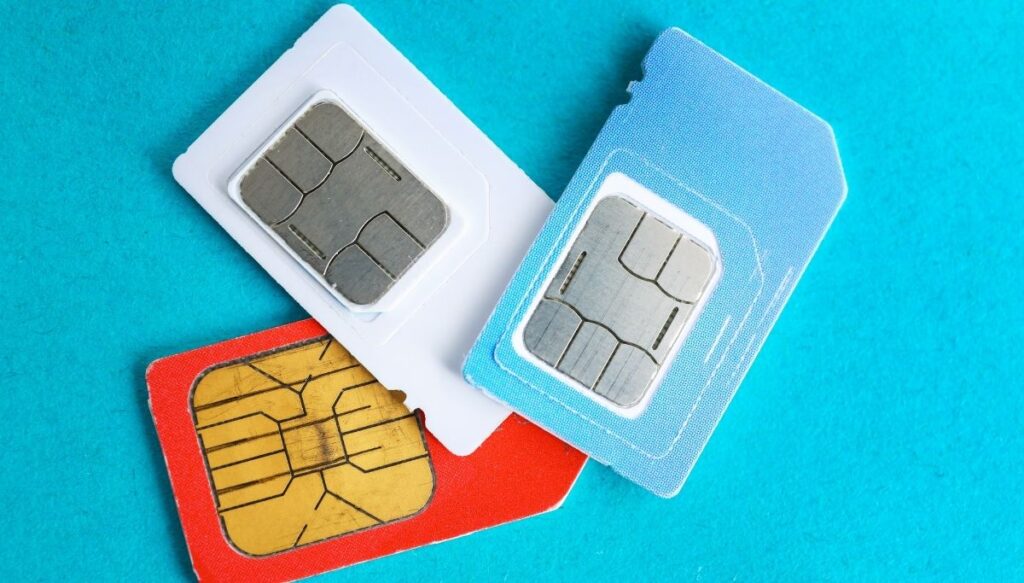
I’m happy you asked. You’ve basically got three choices.
Roaming on your home plan
This is convenient because you don’t need to change anything. However, some US carriers charge daily international roaming fees, which can become expensive over a longer trip.
Always check your provider’s rates and data allowances. Personally, I’d rather spend that money on tapas and vino.
A local Spanish SIM card
A local prepaid SIM can be economical, particularly for longer stays. However, you’ll need a compatible phone, and purchasing one may involve visiting a shop and providing identification.
Spanish phone shops always seem to have a queue whenever I’m in a hurry. Perhaps that’s just my special talent.
A travel eSIM
This is my favorite option, and I use travel eSIMs regularly now. An eSIM is a digital SIM that can be installed on a compatible phone without inserting a physical card.
Depending on the provider, you can purchase a plan before departure and activate it when you arrive.
Before buying, I compare coverage, data allowances, validity periods, and activation instructions.
On my recent trip to Barcelona, I went for an unlimited data SIM card Spain setup. Try saying that after a jug of sangria.
Just remember that unlimited plans sometimes have fair-use limits or reduced speeds after a certain amount of data.
Still, it meant the 2,450 photos of the Sagrada Familia all reached Mom safely. Strangely, she never asks me for photos anymore.
A few more things I’ve learned
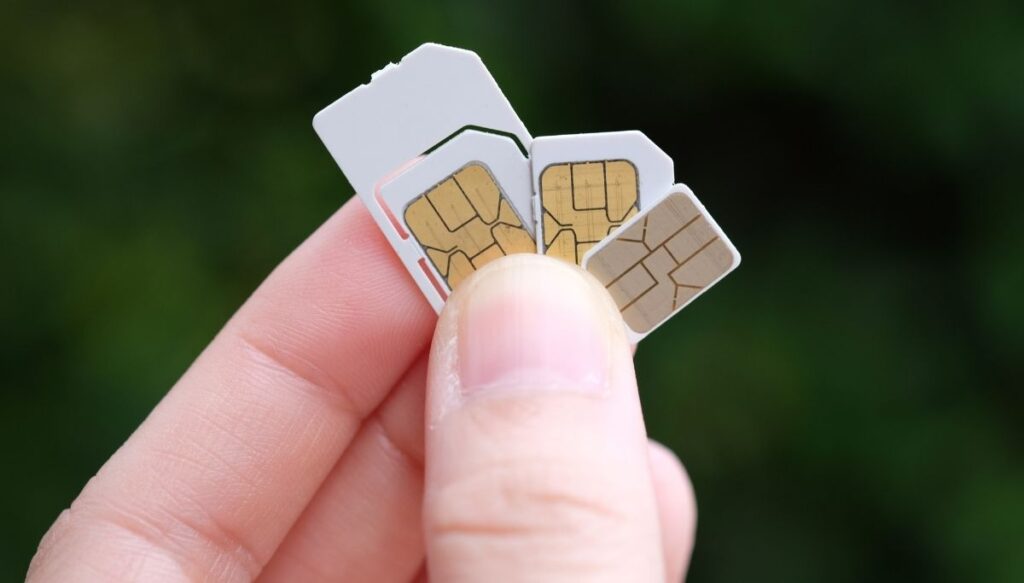
Having mobile data is wonderful, but it doesn’t solve everything. Before traveling, I check whether my phone supports eSIM technology and whether it’s unlocked for another provider.
I also save activation instructions offline and make sure the correct SIM is selected for mobile data.
Nobody wants to come home to a surprise roaming bill.
I use battery-saving mode when I’m exploring, too. Lower screen brightness and fewer unnecessary background apps can help preserve the charge.
And perhaps I don’t need fourteen nearly identical photographs of every building.
Perhaps.
Actually, yes. Solo travel is pretty wonderful. There’s something liberating about choosing your own itinerary, eating whenever you like, and spending three hours somewhere simply because you feel like it.
But independence doesn’t mean ignoring basic precautions. I share my location or itinerary with my best friend when appropriate, avoid isolated shortcuts late at night, and keep my accommodation address written down separately from my phone.
I also know that 112 is the emergency number in Spain and across the European Union. Language assistance may be available, although an English-speaking operator isn’t guaranteed immediately.
Most importantly, I’ve learned to stop and ask for help rather than wandering farther into unfamiliar streets.
Would I go back to Seville?

In a heartbeat. Despite my first-night disaster, Seville became one of my favorite cities.
I loved the architecture, the food, the late evenings, and the way everything seemed to come alive after sunset.
I even returned to Santa Cruz during daylight hours, when it was considerably easier to appreciate without a dying phone.
And yes, I took more photographs of orange trees. Some habits are impossible to break.
The difference is that now I prepare properly. I arrange my data, download my maps, charge my power bank, and make sure I can find my accommodation without depending entirely on a phone screen.
Travel is supposed to be an adventure. It just doesn’t need to become a survival exercise.
Have you ever been lost somewhere with a dying phone? Please make your girl feel less stupid, and share your stories in the comments. I can’t be the only one.