
Planning on driving in Tuscany? If so then you’re in for a treat because this is the all-around BEST way to get around the region.
Driving allows you to get off the beaten path, explore cool vineyards, plan a more flexible itinerary, and enjoy epic panoramas from Medieval, hilltop towns that no one else knows about.
Sure, some famous towns and cities are accessible by bus and train. But, many hot springs, farms, wineries, and tiny villages are not.
So, if you want to have your very own “Under the Tuscan Sun” experience and enjoy a chic stay in the country then you’re 110% gonna need a car.
I mean, you could opt for an NCC (private vehicle with a driver), but they are expensive and need to be booked well in advance. So, not great if you crave flexibility.
No, I prefer renting a car and driving through Tuscany myself. I have done it many times and want to share all my expert tips so that you know what to expect and can plan the perfect trip.
I was a bit nervous at first, but quickly fell in love with having a car in Tuscany since it was essential when visiting farms, castles, and when venturing outside of big towns.
The roads are also well-maintained and feature smaller roads, motorways, and national roads (strade statali).
Additionally, you do not need a giant car for Tuscany. A small, compact car should be fine unless your hotel is very remote.
Therefore, always ask your hotel about the accessibility of the property before you book your stay.
Finally, remember that town centers are generally closed to vehicles unless you are a resident. Therefore, try not to accidentally enter this area since you will have to pay a big fine.
Other than that, just enjoy your time in this magical and use this comprehensive expert guide to help you figure out how to drive in Tuscany.
Since I’m incapable of making it rain money, there’s a high chance that this post may contain affiliate links. Please see my disclosure for more information. As an Amazon Associate, I earn a small commission from qualifying purchases.
Renting a Car in Tuscany?


If you want to rent a car in Tuscany then my #1 pick for the best car rental company in the country is Discover Cars.
I always recommend Discover Cars since they have amazing rates, offer free cancellation up to 48 hours in advance, and have an epic Full Coverage Policy.
In fact, every time I get a rental car in Tuscany, I go to the Discover Cars website and type in my travel dates and pick-up location.
I always like to filter the ratings so that I only see companies with a 7 out of 10 rating, or better. This way I can get the cheapest rental cars from the best companies in the region.
Besides, many of these cheaper, low-rated companies are notorious for adding hidden fees to the bill, making them anything but cheap after I return my car.
Expert Tip: When picking up a rental car in Italy you will usually need your passport, a credit card, and an IDP (International Driving Permit).
I got my IDP from AAA (it was easy) and you will need one if you are from a non-EU or non-EEA country.
Where to Rent a Car in Tuscany
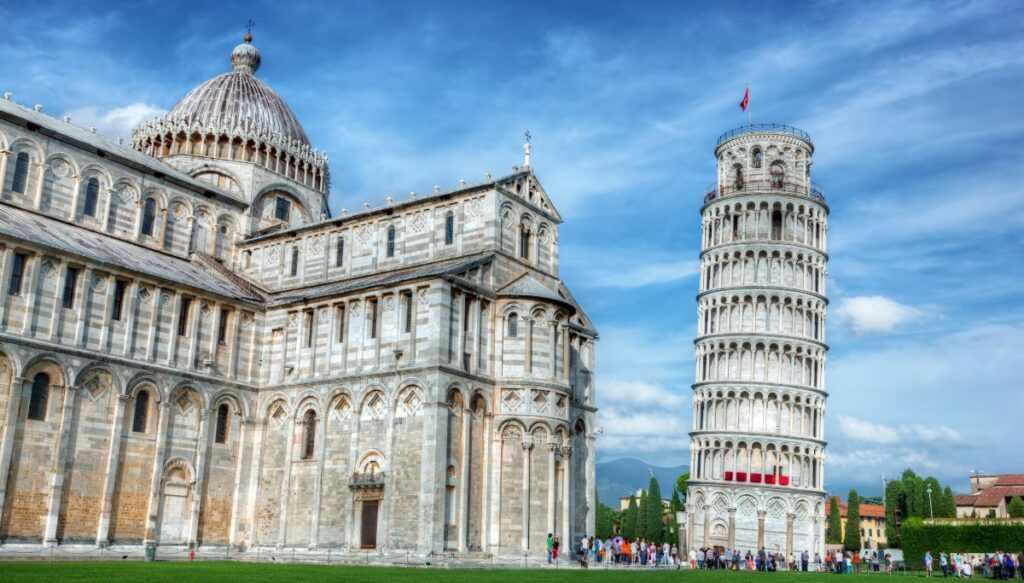

Tuscany is a HUGE region in Italy. Therefore, the best place to pick up your rental car in Tuscany depends on your itinerary and where you plan to go in Tuscany in the fall.
However, some of the best places to rent a car in Tuscany are:
- Florence – Try and pick your car up at the airport so that you don’t have to worry about ZTL’s and driving in the city and can just enjoy wine tastings around Florence during your Tuscany road trip.
- Pisa – A great pick-up and drop-off location. Remember that you will probably need to pay more for your rental car if you drop it off and pick it up at different locations.
These pick-up locations are ideal because they are accessible via public transportation, have more cars available, and are usually open for more hours during the day, making car pick-up 10,000 times easier.
However, you could also pick up your rental car from Arezzo (an excellent starting point if you want to explore southern Tuscany) and Chiusi (accessible from Rome by train and easy to explore the south after a one-day in Rome itinerary.
Tips for Driving in Tuscany


Here are some quick and easy tips for driving in Tuscany. This way you don’t have to stress and waste your time sitting in traffic.
- Don’t Leave Anything in Your Car – Don’t leave anything valuable in your parked car. The sight of suitcases and bags could entice thieves, especially in Pisa.
- Avoid Driving When Commuters are on the Road – Main roads in and around Florence are packed with commuters on weekdays from 7:00 am to 9:00 am and from 5:00 pm to 7:00 pm. Be aware of this when traveling on the autostrade and superstrada between Florence and Siena.
- Download Offline Maps or Use Google Maps – You will probably get lost at some point. So, it’s good to have either Google Maps or Maps.Me for offline use if you do not have a local SIM card. GPS directions are also helpful since they will indicate when speed limits change.
- Know the Speed Limit – Signage about the speed limit can be lacking. So, remember that speed limits are 50 km/h in town (slow down if you see children), 70 km/h on secondary roads entering/leaving town, 90 km/h on straight roads, and 110-130 km/h on autostrade.
- Turn on Your Headlights – Once you leave the city, you need to turn on your headlights, even in the middle of the day.
- Know Local Signs – Blue signs indicate main roads in towns, green signs indicate the autostrade (toll roads), No Parking signs are blue circles with a red border and red diagonal slash through it, and No Stopping signs are blue circles with a red border and have a red “X” through it.
- Know about Roundabouts – There are tons of roundabouts in Tuscany. Know how to use them and understand who has the right of away when using one before you visit. I usually like to slow down before I enter one since traffic in the roundabout generally has the right away.
- Watch Out for Speed Cameras – There are speed cameras EVERYWHERE. So, I do NOT recommend going with the flow of traffic since you can still get a hefty fine. Therefore, always pay attention to the speed limit and avoid speeding.
- Gas is Expensive – Gas in Italy is $8.00 a gallon (or € 1.90 per liter) and can cost more on the autostrade. Generally, gas stations on the autostrade are open 24/7. Local gas stations are open from 7:00 am to 12:30 pm and from 2:30 pm to 7:00 pm. They also close on Sundays and holidays.
- You Can Get Gas When a Gas Station is Closed – If you can drive into a station it usually means that they have self-service pumps. Just pump the gas yourself and pay with cash or a credit card.
The Roads in Tuscany


Most people think that the roads in Tuscany are all tiny dirt roads surrounded by massive stone walls that take you up giant hills. They are terrified and imagine that driving around Tuscany is a nightmare.
Thankfully, that is not the case. Tuscany has all sorts of roads running through it, everything from motorways to local roads (strada provincial) to national roads (strada statale).
Therefore, no need to stress out since you could be driving along major highways as part of an epic wine tour from Florence to Tuscany.
Just research the toll booths on the autostrada and figure out how they work before you visit.
Essentially, all roads marked with an “A” and a number are autostrade and are toll roads.
TBH, there aren’t a ton in Tuscany. However, the A1 (Autostrada del Sole) goes through northern Tuscany, circles around Florence, and then heads southeast to Arezzo and Cortona.
Off the A1, the A11 (Autostrada Firenze Mare) connects Florence to Pisa and the A12 takes you along the coast from Genoa to Viareggio, Pisa, and Livorno.
Other popular roads in Tuscany include the E80 coastal route and the SP 146 Pienza / San Quirico (scenic route) Provincial road.
Yes, you will encounter some small, curvy, roads that take you to the top of quaint, hilltop villages.
However, these roads in Tuscany are designed for cars and shouldn’t be a problem. Just take it slow and follow signs to local parking lots.
Be aware that many of these roads can cause motion sickness. If you are prone to motion sickness, take medication before your visit, especially in places like Chianti.
Sure, there are many teeny tiny roads through small towns. However, you probably won’t use them since most parking areas are outside the center of town. This makes the town a beautiful place to walk around.
Personally, the roads in Tuscany seem very small to me since I am from the USA and am used to big, open roads.
It wasn’t a problem but it was just different from what I am used to. Therefore, I highly recommend renting a small car (no SUVS) to make roads more navigable.
I also recommend taking it slow. You will probably accidentally turn onto a super small road that will take you into a restricted area. If this happens, turn on your hazards so that you can figure out what to do.
Expert Tip: Some remote farms, vineyards, and natural areas are only serviced by very small country roads.
Google Maps will usually indicate this. However, I would ask a local about driving conditions before you visit. This way you know what to expect while driving in Tuscany.
Parking in Tuscany
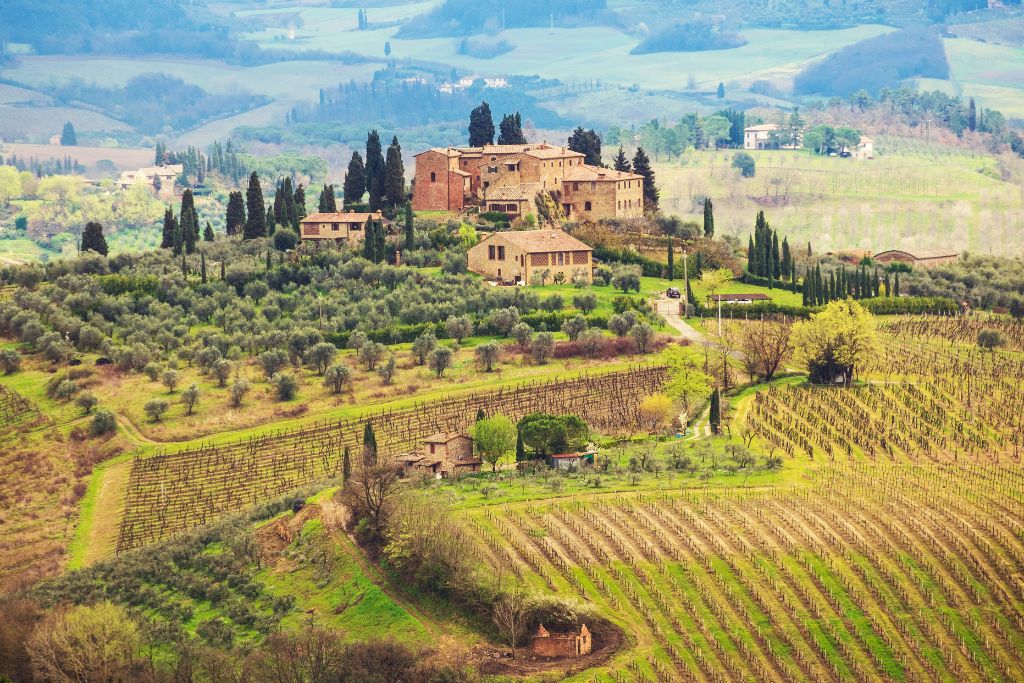

As I’ve mentioned, parking in small towns in Tuscany is usually restricted and only available to town residents.
Therefore, when visiting ancient, hilltop villages, you’ll typically park in public lots outside the center of town.
These parking lots usually have ample signage and can be found by following the big blue signs with a giant, white “P” on them.
You’ll see them as soon as you enter the town and they can be covered, open-air, have attendants, or be self-service. It all depends on where you are going in Tuscany in September.
Always have cash handy since some lots do not accept credit cards. Then, once you’ve paid, display your parking ticket on your car’s dashboard.
I tend to avoid parking on the street since it can be complicated. But essentially, blue lines indicate paid parking. yellow lines indicate disabled parking spots and white lines represent free parking.
With free parking. always look for additional signs that indicate when parking here is not free. Fines can be HIGH and you don’t want to get a parking ticket. Been there, done that and it is very much NOT fun.
How to Avoid ZTL’s
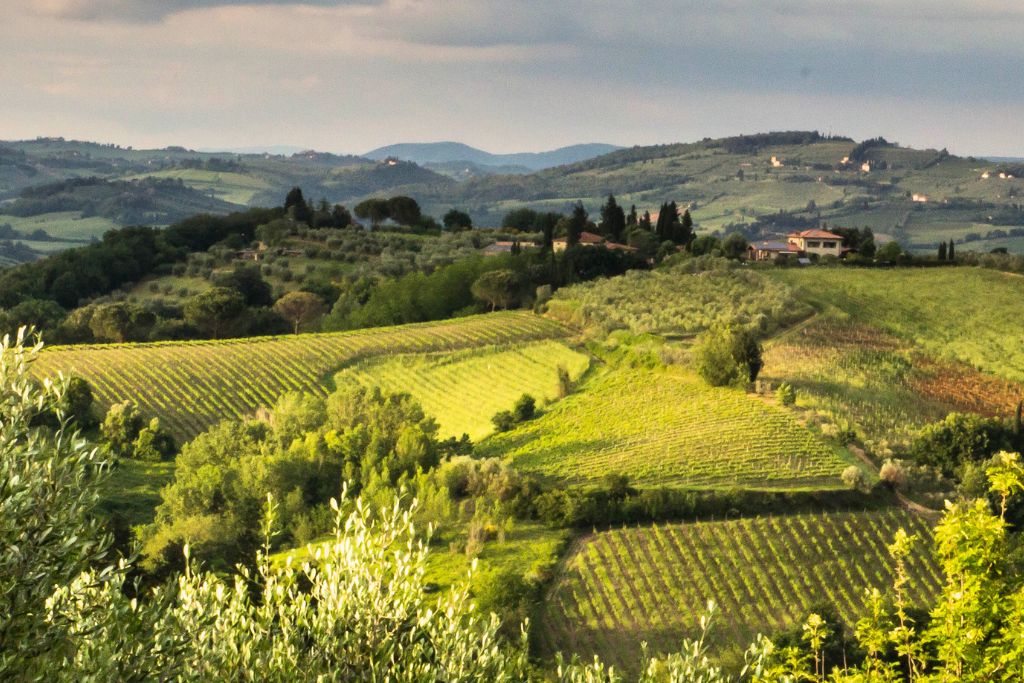
As I have alluded, ZTL stands for ‘zona traffico limitato’ or a limited traffic area.
It is a restricted area inside the center of many Tuscan towns. You’ll know you’re in a ZTL when you see signage, traffic lights, and road signs.
The signs can be white with a red circle and say “zona traffico limitato” on it. If you enter these areas with an unauthorized vehicle you’ll have to pay a BIG fine.
If you receive one of these fines, do not ignore it and pay it IMMEDIATELY. They only get bigger over time and they WILL follow you home.
Basically, you need a special permit and must be a resident to use a ZTL. However, you can contact the local government for a special permit if you or someone you travel with has limited mobility.
Additionally, some hotels will give you a special parking permit if they sit inside a ZTL. Just get the exact details from your accommodation at the time of booking so that you can avoid a fine.
Local Tip: Don’t want to worry about any of this? Some places in Tuscany you can without a car include Lucca, Pisa, Florence, Forte dei Marmi, Viareggio / Forte dei Marmi, etc.
Some smaller towns accessible via an organized day trip are Cortona, Siena, San Miniato, Arezzo, and Castiglioncello.
Conclusion


You now know all the rules when it comes to driving in Tuscany. I hope you found this post useful and aren’t super worried about driving in this part of Italy.
TBH, it was a lot easier than I expected and was worthwhile – so much so that I have gone back and done it again.
My best advice is to go slow, get your IDP, watch out for ZTL’s when entering towns, and rent a small car.
The roads are great, but they can be hard to maneuver with a giant car, especially if you are used to the HUGE four-lane highways in the US (like me).
Do this and you will enjoy an awesome holiday in Italy whether you solo travel Italy or explore the region with a large group.


